
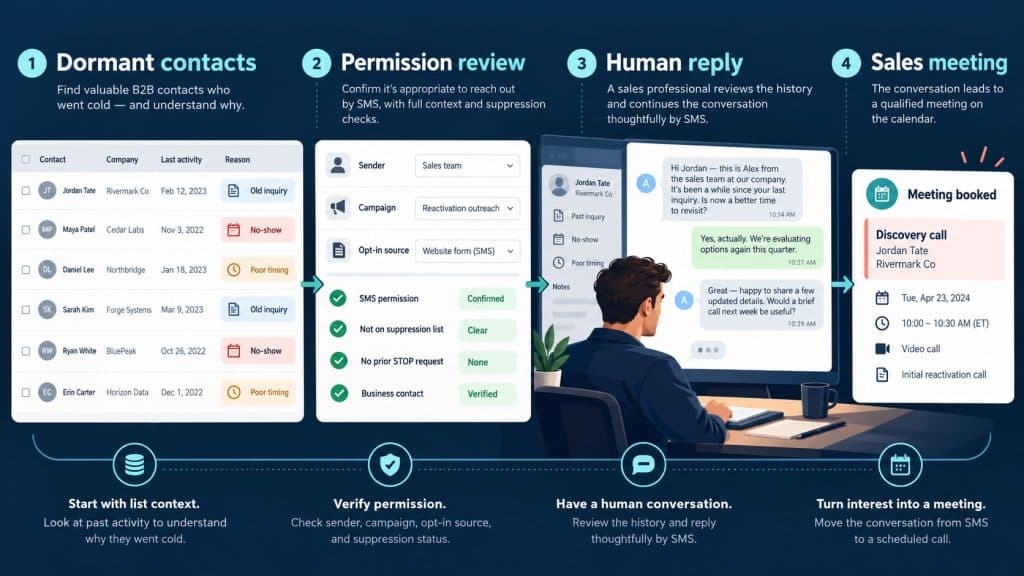
Database reactivation uses permission-based SMS to restart conversations with dormant B2B contacts, using each contact’s prior interaction to shape the next message. Luana Francisca separates no-shows, prior signups, and attendees with poor timing, then assigns a commercially experienced responder. She recommends replies within seconds or the first minute; her team’s 2-3 message path to meetings is an unverified guest estimate.
Last updated: November 4, 2026
How can B2B companies reactivate opted-in old leads by SMS?
B2B teams can follow Luana Francisca’s process: segment opted-in leads by history, text each group, and assign a trained responder. Her team typically moves interested replies to a meeting in 2-3 messages. She recommends answering within the first minute.
About Luana Francisca
Luana Francisca founded Chatfyapp, a managed SMS service for dormant leads. The service handles campaign setup, copywriting, sending, and replies.
In our conversation, Luana described how a WhatsApp campaign changed her belief that growth always required new leads. Her examples include no-shows, poor-timing attendees, and prior signups.
Luana’s story raises a question for B2B lead generation: should a team source new leads or revisit CRM contacts? The decision turns on permission records, list fit, and reply coverage.
Watch the Episode
Table of Contents
What does database reactivation mean for a B2B sales team?
Database reactivation restarts a relevant sales conversation with people already in a company’s records, using their prior interaction to shape the next message. Luana Francisca describes it as a way to work with leads a company has already acquired. That prior history can make the next message specific without assuming age alone determines readiness.
Luana describes 3 groups: no-shows, attendees who didn’t have the right timing, and previous signups. Each contact’s prior action gives the team context for a relevant opening.
A no-show may need a question about the meeting they missed; an attendee might hear about a new time or an updated offer. These are possibilities, not proven scripts.
Luana says fit depends on both the list and the business context. She names marketing, PR, and some professional services as suitable categories; bespoke software sales are harder to handle in a message blast.
Chatfyapp’s site describes campaign setup, copywriting, and execution. In the episode, Luana explains that a person still needs to handle replies and understand the offer.
A reactivation campaign should create a qualified conversation or meeting. Review the contact’s prior interaction and permission record before deciding that a CRM record is eligible for a new text.
How should a B2B team segment inactive leads before a text campaign?
B2B teams should segment inactive leads by their last interaction before sending an SMS. Luana Francisca names 3 groups: no-shows, attendees with poor timing, and previous signups. Keep each group separate so the opener reflects the contact’s actual history, not simply the time since their last reply.
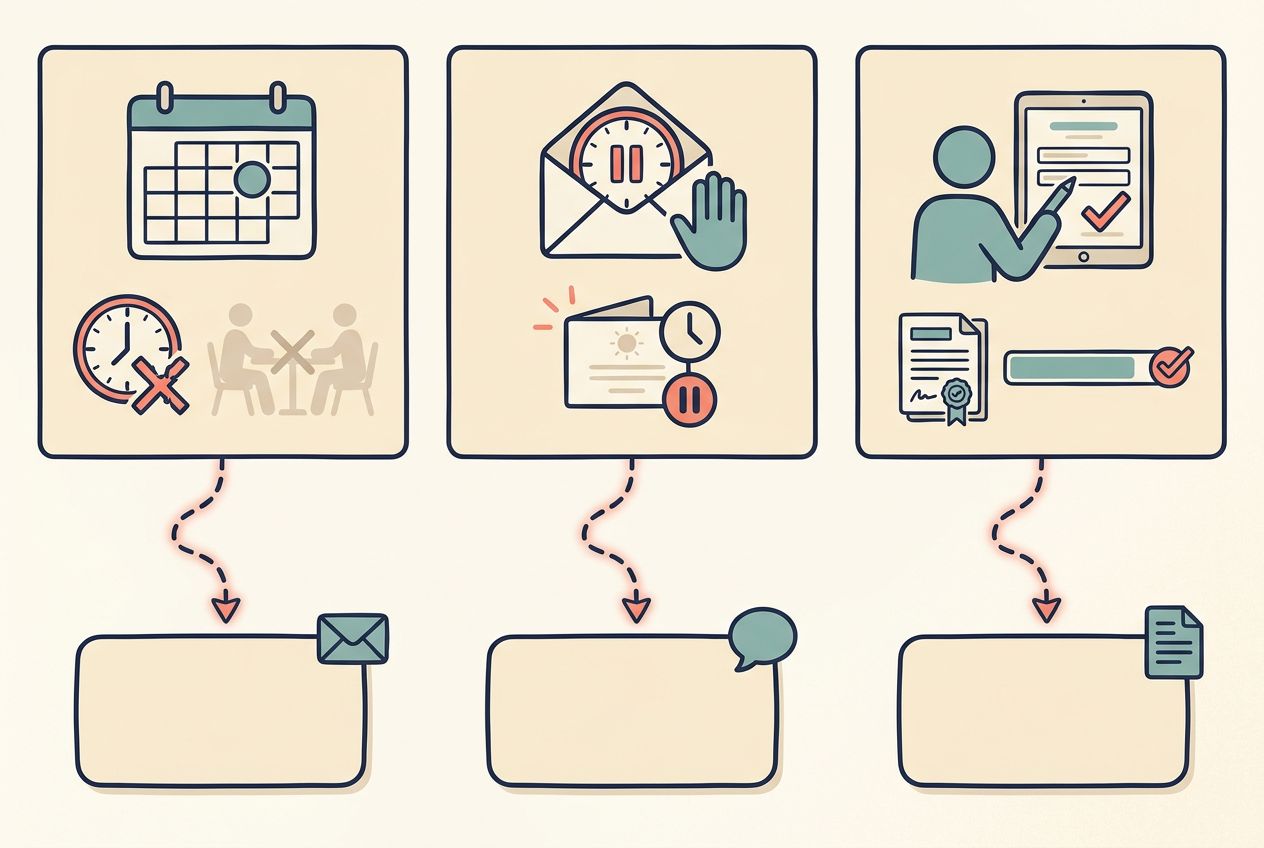
- No-shows: refer to the meeting the contact missed.
- Attendees with poor timing: ask about a new time or a changed offer.
- Previous signups: reconnect with the interest that prompted the signup.
Keep the groups separate when drafting. A text should refer to the contact’s actual last step, not simply the fact that they’ve been quiet.
A no-show message could refer to the missed meeting. An attendee who postponed might hear about a new time or a change in the offer.
A previous signup could receive a reminder tied to the original interest. These are starting points to adapt, not scripts that the episode proves will work.
Start with a group the team can identify, verify, and support with trained replies. Keep each segment distinct in the CRM. Record the prior action, message version, replies, and meetings so one group’s performance doesn’t conceal another’s.
The episode provides no results by segment. Measure each campaign before deciding which group to expand.
The B2B CRM implementation guide offers broader context for documenting contact history and ownership. Teams still need their own campaign data before ranking segments.
What should a company verify before texting old leads?
Before texting old B2B leads, verify each number has a permission record for the intended sender and campaign. The CTIA recommends sender- and campaign-specific opt-in. A CRM number alone doesn’t show who received permission or what messages they agreed to receive, so match the source record to the planned campaign.
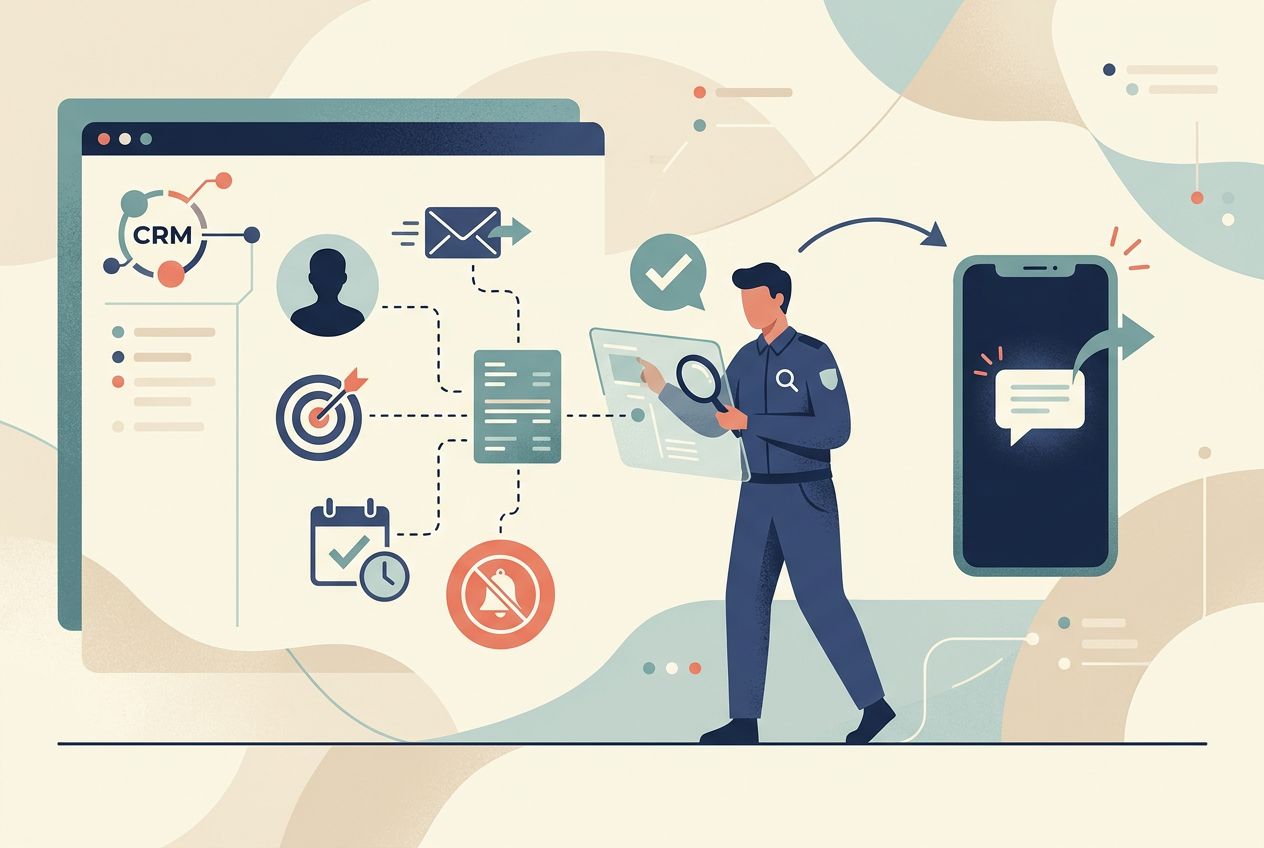
The CTIA recommends sender- and campaign-specific opt-in. Where applicable, it also recommends retaining when and how consent was collected, the campaign, the phone number, and the person who consented. Its guidance asks senders to retain opt-outs and regularly process deactivation files.
Luana says Chatfyapp can advise clients but cannot independently establish how a supplied list was collected. That leaves the sending company responsible for reviewing its own records. Don’t infer permission from CRM membership or from a contact’s past relationship with a different sender.
Check the intended campaign against the available consent record, suppress opt-outs, and remove disconnected numbers. The CTIA document describes voluntary industry practices and says it isn’t legal advice.
CTIA’s recommendations can inform an operational review; they don’t establish that a specific campaign satisfies every applicable rule. Consult qualified counsel for the campaign’s jurisdiction and use case.
CTIA’s guidance and Luana’s caveat point to the same launch question: can the sender show why this person is eligible for this campaign? If the record is unclear, resolve it before sending.
Why do brand and list quality matter as much as the SMS copy?
B2B SMS outcomes can vary with brand recognition and list quality as well as message copy, according to Luana Francisca’s account. She describes one campaign where a recognized brand and better-selected list performed better while the copy stayed the same. Her episode offers one operator comparison, not a controlled test.
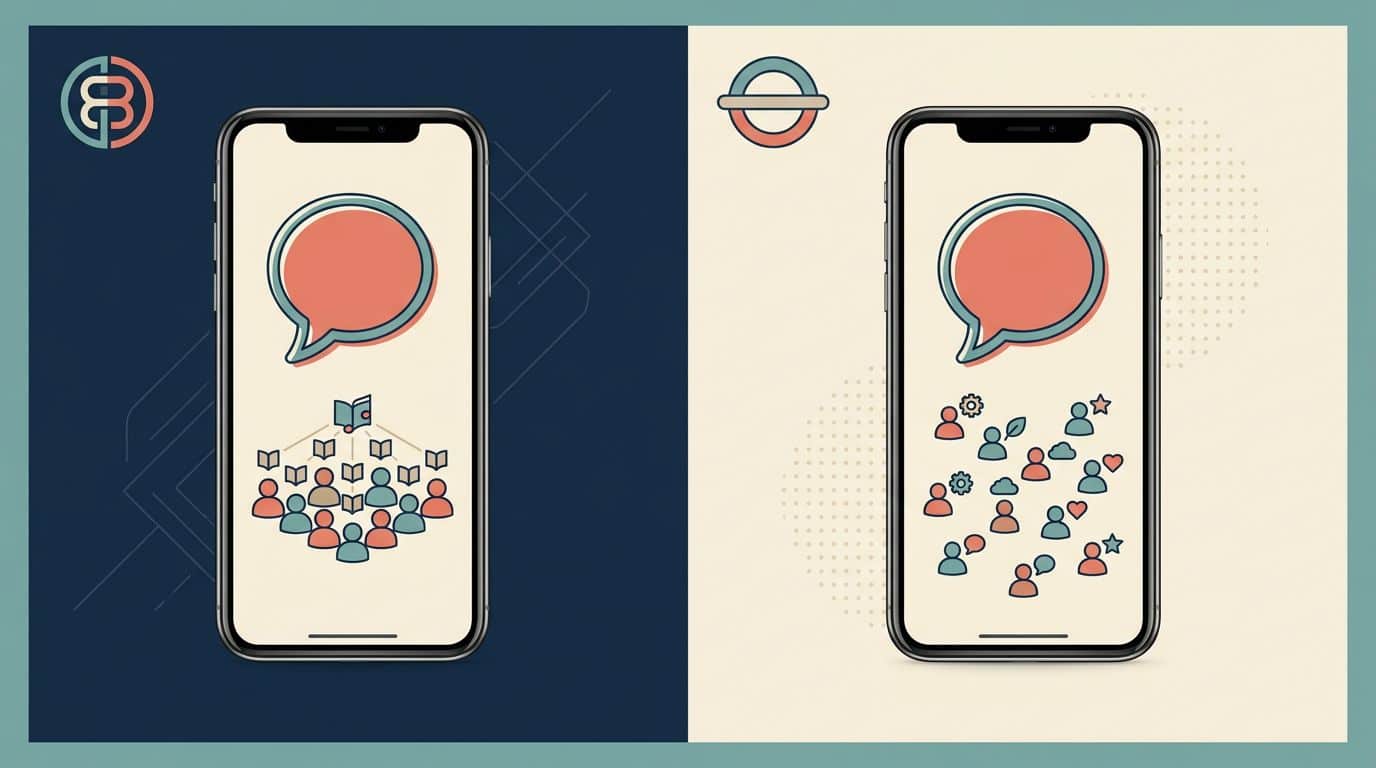
The episode doesn’t isolate brand recognition, list freshness, or other differences. Luana doesn’t present the case as a controlled comparison, so the account can’t show which factor caused the change or predict another company’s results. Keep the message version constant when isolating one segment.
A useful campaign test records the segment, prior interaction, brand context, message version, and send window. Compare similar groups before rewriting the copy. If the audience and message both change at once, the team won’t know what drove a different result.
Luana gives no universal weighting for brand versus list quality. Treat her account as an operator observation and use your campaign records to decide what to change next.
Who should respond when a lead replies to a reactivation SMS?
Assign a commercially experienced person to own replies before the campaign starts. Luana says her team looks for responders with a sales background because prospects ask different questions. Before sending, name the reply owner, the questions they can handle, and the point when they should hand off to sales.
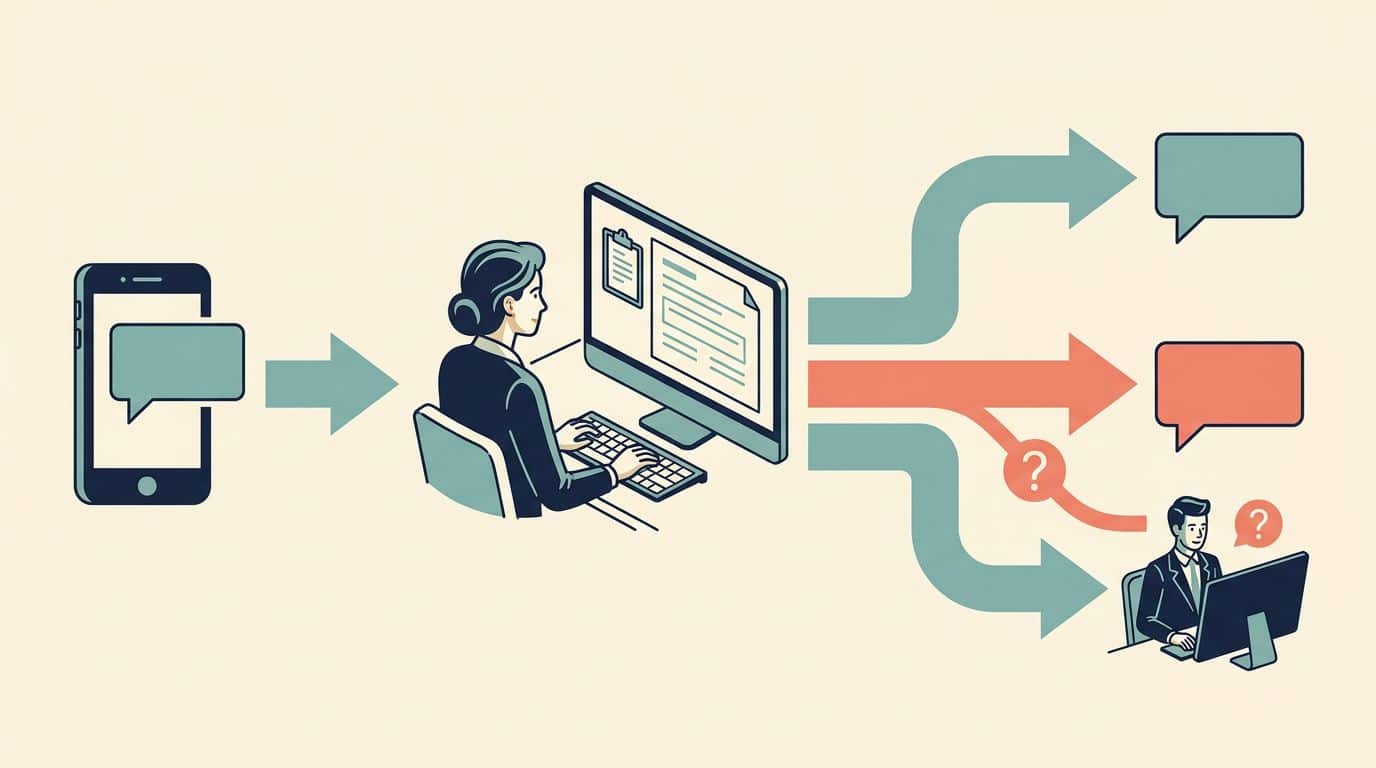
Luana recommends answering within seconds or the first minute. This is her operating standard, not a tested benchmark.
Luana says her team typically reaches a meeting in 2 to 3 messages after an interested reply. The episode doesn’t establish that every response becomes a booking.
Give the responder enough detail about the offer to avoid improvising. If a question needs sales expertise, assign a follow-up owner and keep the conversation attached to the CRM record.
Set batch size around the team’s reply capacity. Luana describes sending different batch sizes at different times.
Human coverage needs to match the expected replies; a text blast is not a complete sales process. Confirm someone can act on replies at the scheduled send time.
How should a team pilot and measure SMS lead reactivation?
Track delivery, replies, opt-outs, qualified conversations, meetings, and costs by segment. Luana says her platform reports SMS opens but couldn’t explain how it calculates that figure. When I asked about the measure, she confirmed that she didn’t know how the platform derives it.
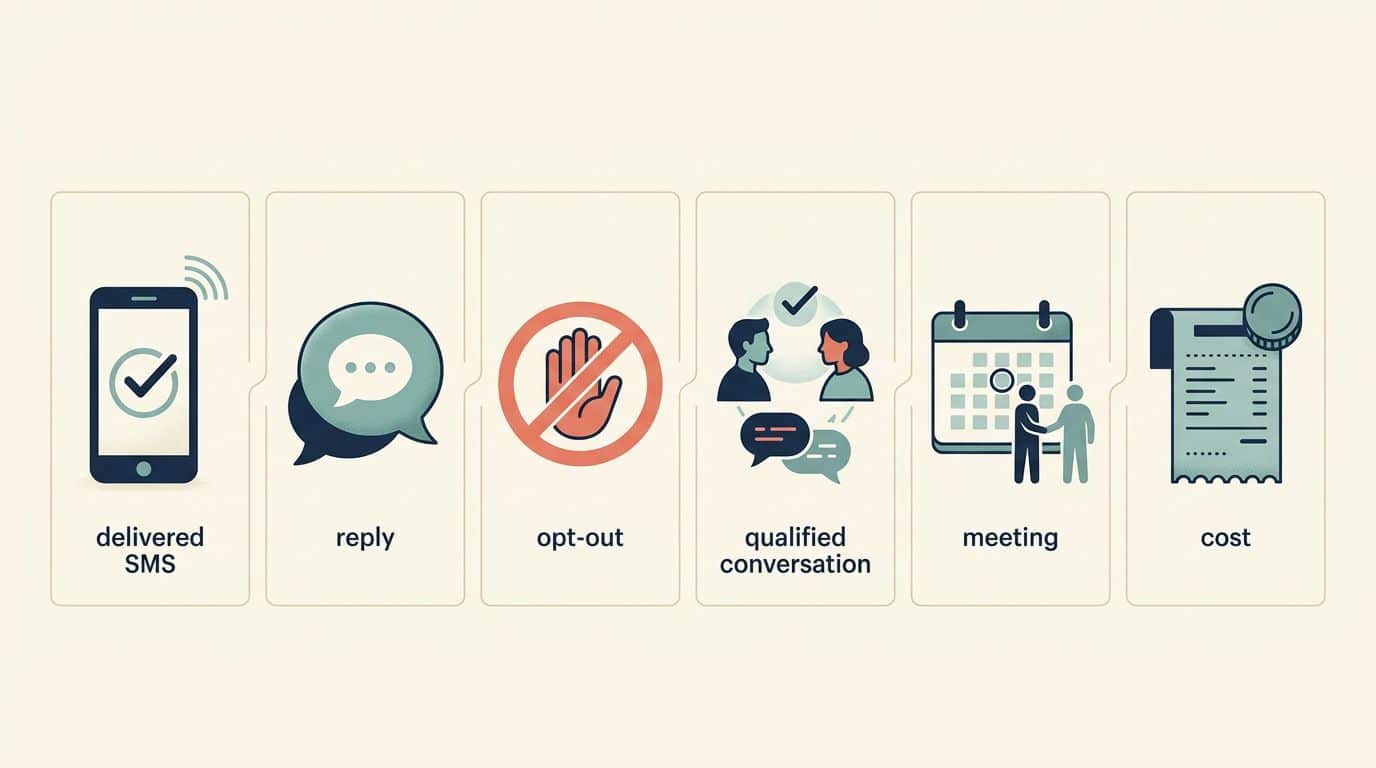
Twilio lists delivery, clicks, conversions, unsubscribes, and ROI as SMS measures. Its examples don’t establish benchmarks for B2B meetings.
Klaviyo says its platform doesn’t track SMS opens. It recommends focusing on clicks. That documentation describes Klaviyo, not every SMS provider.
Tag each contact with the segment, prior interaction, consent source, message version, and campaign. Then separate replies from qualified conversations, booked meetings, held meetings, and revenue. A high reply count doesn’t show pipeline impact by itself.
Use the cost of a held meeting as one measure when the company can calculate it reliably. For broader pipeline planning, see Sproutworth’s B2B demand generation strategy guide. Keep open-rate figures labeled with their provider and method; the episode doesn’t verify Luana’s platform metric.
Before the first send, agree what counts as a qualified reply, a booked meeting, and a held meeting. Record those definitions beside the campaign data, then use the same definitions for each segment. Review opt-outs and reply coverage alongside conversion measures so a promising meeting count doesn’t hide a list-quality or staffing problem.
If the team cannot identify the consent source or assign someone to handle replies, pause that segment until it can. Keep a record of who owns each reply handoff, so a prospect doesn’t have to repeat their question.
Frequently Asked Questions
How can B2B companies reactivate opted-in old leads by SMS?
B2B teams can reactivate opted-in leads by segmenting contacts by prior behavior, texting each group with a relevant opener, and assigning a trained responder. CTIA recommends tying permission to the specific sender and campaign. Luana says her team often moves replies to meetings in 2 to 3 messages, a guest-reported estimate without independent verification.
What does database reactivation mean for a B2B sales team?
Database reactivation means restarting a relevant sales conversation with someone already in a company’s records. Luana’s examples include no-shows, previous signups, and people who attended but at a bad time. Her episode doesn’t compare these groups, so teams should test them separately before deciding which to expand.
Keep each group distinct during an initial test.
How should a B2B team segment inactive leads before a text campaign?
Segment inactive leads by what happened before the conversation stopped: a missed meeting, an attendee who needed more time, or a previous signup. Luana says the list and offer affect fit, but she provides no results by group. Treat them as test categories, record results separately, and rank them only after your campaign data supports a choice.
Who should respond when a lead replies to a reactivation SMS?
Assign a commercially experienced person who can answer questions about the offer and book or route the next step. Luana recommends replying within seconds or the first minute, and says her team often reaches a meeting in 2 to 3 messages. Those are her operating observations, not independently verified benchmarks.
What should a company verify before texting old leads?
Before texting, match the contact’s permission record to the intended sender and campaign, then remove opt-outs and disconnected numbers. CTIA recommends retaining consent details and opt-out records, but its guidance is voluntary and not legal advice. Luana says Chatfyapp can’t verify how clients obtained its lists, so senders need to check the source themselves.
Start with the contact’s last interaction
Luana Francisca says a WhatsApp reactivation campaign changed how she views growth. Her account suggests a stalled sales conversation is worth revisiting when the contact’s history, offer, and permission are clear.
For B2B tech founders, her examples point to different openings for no-shows, attendees with poor timing, and previous signups. Campaign fit depends on the list and offer; Luana says bespoke software sales are harder to handle in a blast.
Start with a segment you can verify, then name a commercially experienced responder before sending. Compare replies, held meetings, and campaign costs with Luana’s guest-reported operating observations.
Luana’s episode doesn’t rank the segments or independently verify results. Use the examples as hypotheses for a measured test.
For future list building alongside your existing database, Sproutworth’s US$49 lean membership offers support.
Which past-contact segment can your sales team verify and test first in a database reactivation campaign?
Related Resources
- 7 Amazing Nurturing Leads Strategies That Boost Growth: Mary Kathryn Johnson discusses lead nurturing through Messenger and SMS.
- How to Craft Irresistible Email Nurturing Campaigns That Drives Growth: Scott Bywater explores email nurturing and re-engagement campaigns.
- Integration of Sales and Marketing: How to Elevate Client Success and Growth: Shaily Hakimian discusses lead handoffs, team alignment, and client retention.
Related Links
Some topics we explore in this episode
- Why did Luana once treat leads who went quiet for 2 weeks as lost, and what changed her mind?
- What did a WhatsApp campaign in Brazil show her about adapting text reactivation for the U.S. market?
- What happens between a company handing over its contact list and a meeting appearing on a salesperson’s calendar?
- Should no-shows, people who had bad timing, and previous signups get the same reactivation message?
- Why couldn’t some companies act even after Luana shared the copy and explained the process?
- Why did Luana see SMS as a less crowded way to reach B2B contacts than LinkedIn or email?
- What clues did Luana connect to brand recognition and list freshness when the message copy stayed the same?
- Why does Luana prefer starting a conversation over asking for a meeting in the first text?
- What can happen to an interested lead if the reply waits 5 minutes instead of arriving in the first minute?
- Who should handle the replies, and what does a commercial background add to that conversation?
- Why does Luana say 2 or 3 messages can be enough before a salesperson takes the meeting?
- Which campaign numbers does Luana track, and what could she not explain about the platform’s “opened” metric?
- What does Luana check about a company’s website, opt-in, list, and handoff before a trial?
- How might AI, carrier rules, and a more crowded texting channel change the reactivation approach?
Listen to the episode
Subscribe to & Review the Predictable B2B Success Podcast
Subscribe to the Predictable B2B Success Podcast on Apple Podcasts and leave an honest review if the show has been useful.
