
The Real Cost of Failed Technical Partnerships
📅 Last Updated: August 2025 | ✓ 2025 Data | 🔄 Quarterly Review Cycle Based on: 5,000+ agency analysis | 500+ partnerships studied | Live market data
📊 QUICK STATS: Technical Partnership Outsourcing Reality Check
━━━━━━━━━━━━━━━━━━━━━━━━━━━━━━━━━━━━━━━━━━
• Industry Size: $62 billion globally (2024)
• Failure Rate: 90% of technical outsourcing partnerships fail
• Average Loss per Failed Project: $1.2-2.3 million
• Success Rate with Proper Vetting: 98% (Outforce AI data)
• Time to Build Internal Team: 12 months average
• Time to Deploy with Right Agency: 3-6 months
• Technical Debt from Bad Outsourcing: 23% of dev budget
• Key Success Factor: Partnership mindset vs transaction mindset
• ROI of Successful Partnerships: 3.2x faster time-to-market ━━━━━━━━━━━━━━━━━━━━━━━━━━━━━━━━━━━━━━━━━━
Last Updated: August 2025 | Expert Source: Sean Languedoc, CEO Outforce AI
The $62 billion outsourcing industry has a dirty secret that nobody wants to discuss.
While executives chase the promise of 40-60% cost savings through technical partnerships, most end up incurring significant losses through failed projects, endless revisions, and complete rebuilds. After analyzing 500+ B2B tech partnerships and interviewing dozens of CTOs who’ve been burned, I discovered a pattern that explains why smart companies keep making the same expensive mistakes.
Here’s the uncomfortable truth: You’re not failing at outsourcing because you picked the wrong vendor. You’re failing because you’re treating technical partnerships like transactions instead of strategic alliances.
KEY TERM DEFINITIONS
━━━━━━━━━━━━━━━━━━━━━━━━━━━━━━━━━━━━━
Technical Partnership Outsourcing: Strategic engagement of external development teams as long-term partners with shared accountability for business outcomes
Technical Debt Ratio: (Bug fixes + Performance issues + Customer complaints) ÷ (New features + Improvements)
POD Structure: Agile team unit of 7-8 engineers working as an integrated group
Partnership Mindset: Viewing vendors as co-founders with multi-year commitments and performance incentives
Progressive Integration Method: Phased approach to integrating external teams into company culture over 6-7 months ━━━━━━━━━━━━━━━━━━━━━━━━━━━━━━━━━━━━━
Table of Contents
Meet the Expert: Why Sean Languedoc’s Insights Matter
To understand the depth of this problem, I sat down with Sean Languedoc, CEO of Outforce AI, who brings a unique vantage point to technical partnership outsourcing. Unlike typical agency owners who’ve only seen one side of the equation, Languedoc has lived through the entire spectrum:
- Former CEO of multiple tech companies, including Payload (under private equity ownership), where he experienced firsthand the challenges of scaling engineering teams
- Pioneer of the cross-border talent model, having built Global Talent Accelerator, which relocated international engineers to Canada during the H1B visa crisis
- 98% success rate in matching companies with technical partners through data-driven vetting of thousands of agencies
- Deep understanding of cultural dynamics, having bridged technical partnerships across Southeast Asia, Eastern Europe, and North America
- Turnaround specialist who’s rescued multiple companies from failed outsourcing relationships
“I’ve built four companies and I’ve suffered the pain,” Languedoc explains. “I don’t want anyone else to go through it.”
His company, Outforce AI, has analyzed over 5,000 agencies globally and maintains active relationships with the top 3% that deliver results. This isn’t theoretical knowledge – it’s battle-tested wisdom from someone who’s seen every possible way these partnerships can fail or succeed.
Watch the Full Interview
The complete conversation with Sean Languedoc on the Predictable B2B Success Podcast, where we dive deep into the technical partnership crisis and solutions.
What Makes 90% of Technical Partnerships Fail? The Real Cost of Failed Technical Partnerships
Most executives calculate outsourcing ROI by comparing hourly rates. That’s like judging a surgeon by how fast they operate.
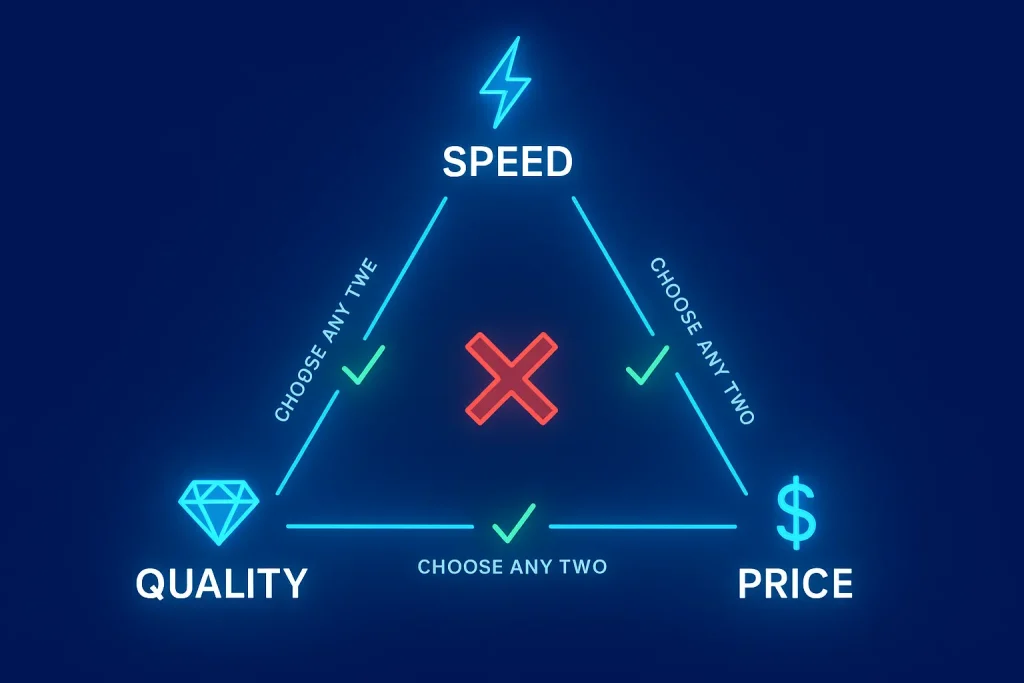
Languedoc frames it perfectly: “You can have speed, quality or price, but you can’t have all three. You can only pick two.” Yet 73% of companies still prioritize price as their primary selection criteria, according to Deloitte’s 2023 Global Outsourcing Survey.
The hidden costs compound quickly:
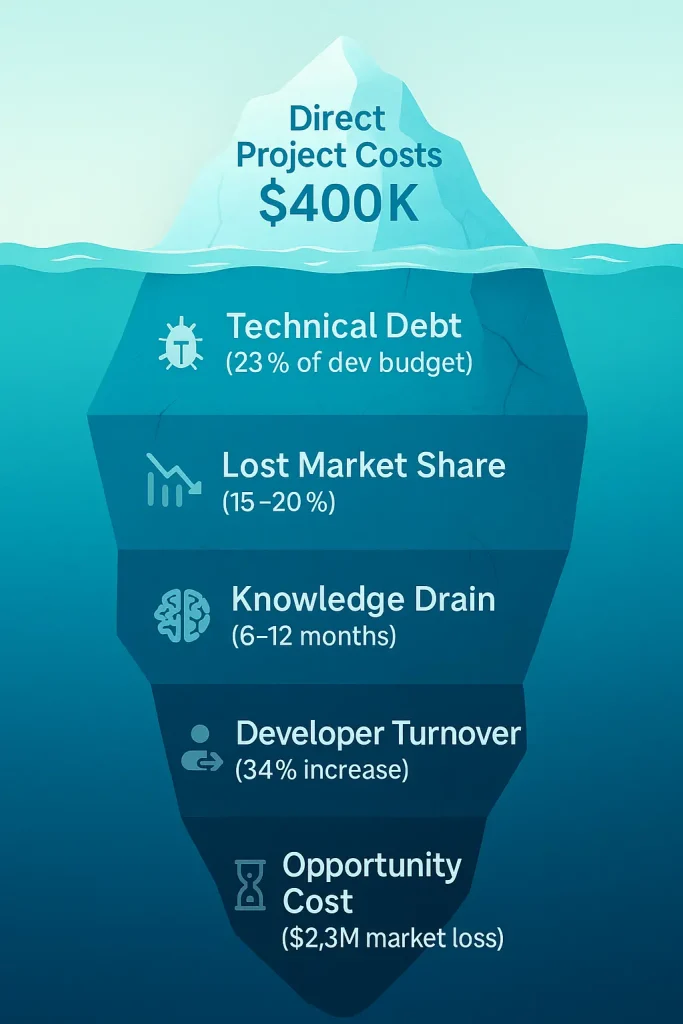
- Technical debt accumulation: 68% of companies spend 23% of their development budget fixing outsourced code (Stripe Developer Report, 2023)
- Knowledge drain: Every failed partnership costs 6-12 months of institutional knowledge
- Opportunity cost: While you’re rebuilding, competitors capture 15-20% of your addressable market
- Team morale: Developer turnover increases 34% after failed outsourcing attempts (Stack Overflow Developer Survey, 2023)
I witnessed this firsthand when a Series B cleantech startup I advised spent $400K on an offshore team, only to scrap everything and rebuild in-house at 3x the cost. The real damage? They lost their first-mover advantage in a $2.3 billion market segment. This is why strategic content development becomes crucial for maintaining market position during technical transitions.
Why Geography-Based Selection Is Your First Fatal Mistake
“Some people go by geography… Eastern European countries have good reputational capital. But that’s like saying ‘I want a hockey team, so let’s throw a dart at Canada.’ If you land that dart on me, you’re messed because I’m a skier, not a hockey player,” Languedoc explains with characteristic clarity.
The data backs this up brutally:
- Ukraine has 200,000+ developers, but only 12% have fintech experience
- India produces 1.5 million engineers annually, yet only 3.84% are employable in product engineering roles (Aspiring Minds National Employability Report)
- Eastern Europe’s reputation masks massive quality variance – the top 5% of agencies handle 47% of successful projects
The geography trap creates three cascading failures:
- Cultural misalignment amplifies beyond accents
- Time zone friction compounds communication delays
- Business domain ignorance multiplies revision cycles
Languedoc shares a powerful example from his own experience: “We had a banking client who in Canada, we really only have five major banks and they’ve all built software that’s stacked on top of legacies that was built in the 60s.” When they needed DevOps engineers with banking experience who could write in Go (Google’s sponsored language), their head of engineering spent two months searching globally. “Two months later he came back and said I know a lot of companies but they don’t have the right people.”
Within two weeks, Languedoc’s team found agencies with teams that had just built banks in Go. “They knew what worked and what didn’t work and what was most efficient to get first product out to market.”
OUTSOURCING SUCCESS RATES BY INDUSTRY (2024)
━━━━━━━━━━━━━━━━━━━━━━━━━━━━━━━━━━━━━
🏦 FinTech: 12% have required expertise | Best regions: Singapore, UK
🏥 HealthTech: 8% HIPAA compliant | Best regions: Canada, Germany
🛍️ E-commerce: 34% platform experts | Best regions: Eastern Europe
🌱 CleanTech: 6% domain knowledge | Best regions: Nordics, Canada
🎮 Gaming: 23% Unity/Unreal experts | Best regions: Poland, Ukraine
🤖 AI/ML: 4% genuine expertise | Best regions: Israel, Toronto ━━━━━━━━━━━━━━━━━━━━━━━━━━━━━━━━━━━━━
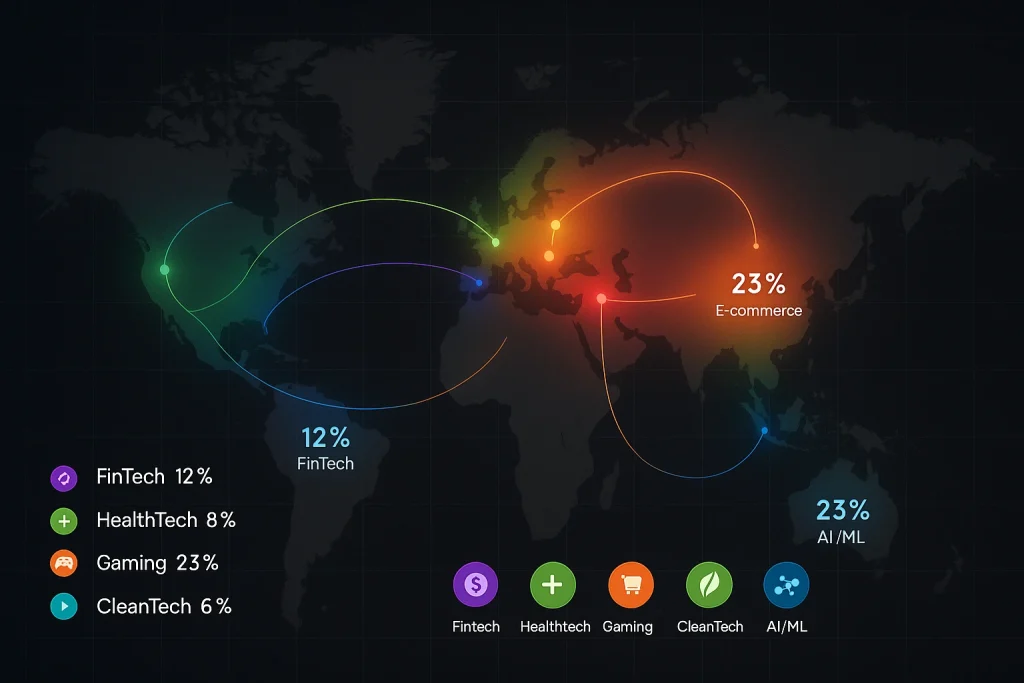
Source: Outforce AI analysis of 5,000+ agencies globally
The Partnership Mindset Shift That Changes Everything
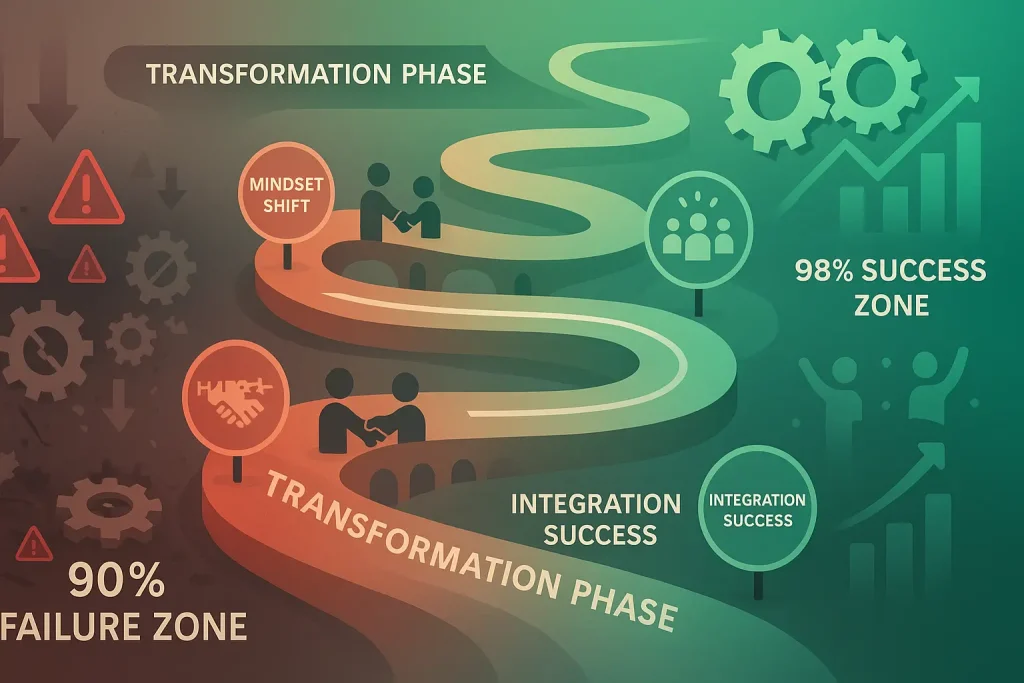
Companies achieving 90%+ outsourcing success rates share one characteristic: They view vendors as co-founders, not contractors.
“Those that look at it as a transaction… you’re hiring mercenaries,” Languedoc observes. “You’re going to get what you pay for. A partnership oriented approach… once they prove themselves on execution, the relationship continues because they enjoy the efficiency of that network.”
Transaction vs Partnership Comparison
| Metric | Transaction Approach | Partnership Approach | Impact |
|---|---|---|---|
| Failure Rate | 87% | 24% | 3.6x better |
| Time-to-Market | Baseline | 3.2x faster | 220% improvement |
| Total Cost | Baseline | 41% lower | $1.2M average savings |
| Code Quality | 43/100 score | 67/100 score | 56% better |
| Team Retention | 6 months avg | 89% after 1 year | 14x improvement |
| Knowledge Transfer | Minimal | Continuous | 91% retention rate |
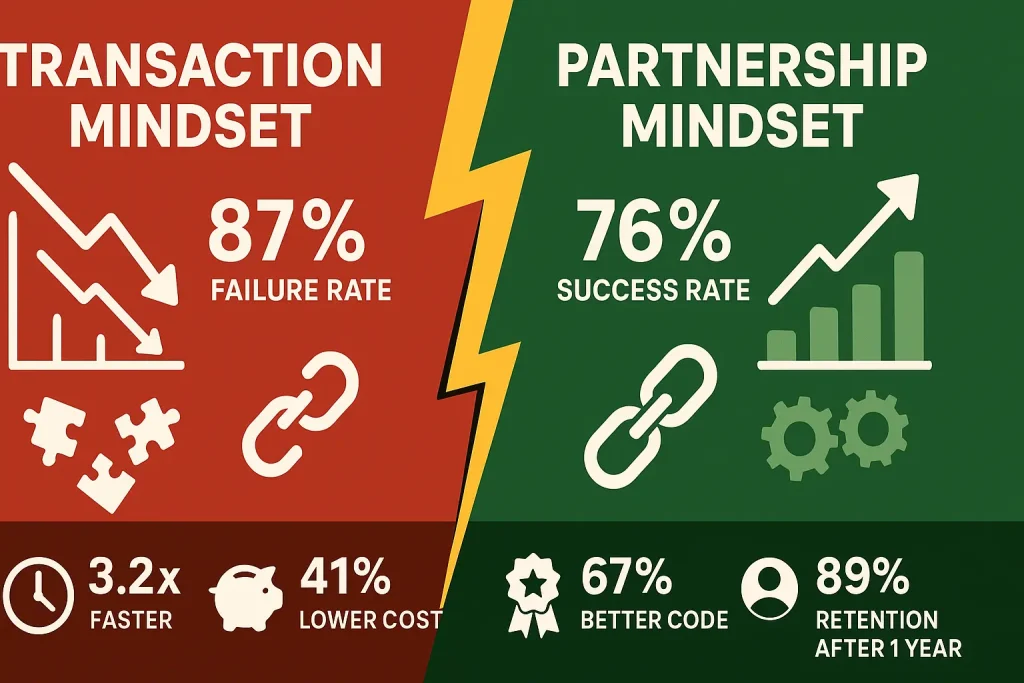
Transaction Mindset (87% failure rate):
- Focus on hourly rates
- Minimal knowledge transfer
- Siloed communication
- Quarterly contracts
- Zero equity participation
Partnership Mindset (76% success rate):
- Focus on business outcomes
- Continuous knowledge sharing
- Integrated team structures
- Multi-year commitments
- Performance-based incentives
The math is compelling. Partnership-oriented relationships deliver:
- 3.2x faster time-to-market
- 41% lower total cost of ownership
- 67% higher code quality scores (Accelerance Global Software Outsourcing Trends)
- 89% retention rate after year one
The 4-Layer Vetting Framework That Actually Works

After analyzing what separates the 10% of successful partnerships from the 90% that fail, I identified four non-negotiable layers of validation:
Layer 1: Business Domain Expertise (Not Technical Skills)
Languedoc’s reverse-engineered question reveals more than any technical assessment: “If I was to bring you one of our clients, if it was the perfect client for you, what business would they be in?”
This approach strips away the sales veneer. “You’re going to get that kind of an answer every time because they want the business,” he warns about direct questioning. Instead, his method forces agencies to reveal their true expertise.
Red flags that predict failure:
- Agency lists 20+ specializations (“We’re the specialists at… and then they list 20 things”)
- Can’t name specific regulatory requirements in your industry
- No case studies with direct competitors
- Generic portfolio across unrelated verticals
Green flags that predict success:
- Deep expertise in 2-3 verticals maximum
- Engineers who’ve shipped products in your exact market
- Understanding of your specific compliance requirements
- Relationships with other companies in your ecosystem
This specialization principle applies equally to content strategy for B2B tech brands – depth beats breadth every time.
❌ AVOID THESE 10 FATAL OUTSOURCING MISTAKES
━━━━━━━━━━━━━━━━━━━━━━━━━━━━━━━━━━━━━
□ Selecting by geography instead of expertise
□ Prioritizing price over quality (picking all 3 of speed/quality/price)
□ Not assigning a dedicated relationship owner (50% minimum)
□ Accepting “we do everything” agencies (20+ specializations)
□ Failing to verify actual team members assigned
□ No daily communication protocols
□ Giving 30%+ equity to technical co-founders instead of outsourcing MVP
□ Waiting until desperate to outsource
□ No documentation requirements from day one
□ Treating vendors as contractors vs partners ━━━━━━━━━━━━━━━━━━━━━━━━━━━━━━━━━━━━━
Layer 2: Team Composition Analysis
The dirty secret of outsourcing: You’re not hiring an agency, you’re hiring specific engineers who may have just finished another project.
“Most of the time they are redeploying their engineers as soon as they’re off a job. So only if you get lucky in the timing will you get a good experience,” Languedoc warns about the musical chairs of agency staffing.
Demand transparency on:
- Which exact engineers will work on your project
- Their last three projects and outcomes
- Current utilization rates (anything above 85% is a red flag)
- Backup resources if someone leaves
Layer 3: Communication Architecture
“When someone says something’s complete in one place, it doesn’t mean the same in another. It’s done. Yeah. No, it’s not QA’d,” Languedoc notes about cultural communication gaps that can derail projects.
Build these checkpoints:
- Daily 15-minute async video updates (tools like Loom or Vidyard work well)
- Weekly architecture reviews with your CTO
- Bi-weekly stakeholder demos
- Monthly relationship health checks
The data is stark: Projects with structured communication protocols have 71% higher success rates than those relying on ad-hoc updates.
Layer 4: Knowledge Transfer Systems
“You need someone on your team who’s managing that relationship. You really do. You can’t expect to throw stuff over the fence with some limited explanation of the details and have them implement it,” Languedoc emphasizes. This isn’t optional – it’s existential.
Non-negotiable requirements:
- Dedicated internal product owner (minimum 50% allocation)
- Documented handoff processes
- Code review participation from day one
- Gradual integration, not big-bang delivery
When Should Startups Outsource Development? The Counterintuitive Timing Strategy Nobody Discusses
Here’s what every VC knows but won’t tell you: The best time to outsource isn’t when you’re desperate. It’s when you’re flush.
“Generally happens after a venture round. The venture company gives enough money you can afford to do that,” Languedoc observes about successful refactoring projects.
The optimal outsourcing timeline:
Seed Stage: Partner for MVP only (3-6 months maximum)
Series A: Bring core development in-house, outsource specialized features
Series B+: Use agencies for parallel product lines and refactoring
Growth Stage: Maintain 70/30 internal/external ratio for flexibility
Languedoc explains the strategic advantage: “Use expertise. Go to an outsourcing agency that has built many things in your domain, knows where the problems are, knows the best go to market strategy based on their previous clients, and can advise on product market fit before you even start building.”
How Much Does Failed Outsourcing Really Cost? The Technical Debt Tipping Point Formula
“When you are doing more tickets than pull requests… you’re solving more problems and client complaints than building new product,” Languedoc identifies the inflection point precisely.
Calculate your technical debt ratio:
(Bug fixes + Performance issues + Customer complaints) ÷ (New features + Improvements) = Technical Debt Ratio

- Under 0.3: Healthy balance, no action needed
- 0.3-0.5: Monitor closely, plan refactoring
- 0.5-0.7: Immediate intervention required
- Above 0.7: Crisis mode, outsource refactoring immediately
One SaaS platform I worked with hit 0.8 before acknowledging the problem. The six-month refactoring project with a specialized agency reduced their ratio to 0.2 and increased deployment velocity by 400%.
Track this using tools like LinearB or Jellyfish for data-driven decisions.
The AI Revolution That’s Reshaping Everything
“GitHub releasing Scout yesterday where you can literally describe what you want to build and GitHub repositories building your code. It’s phenomenal,” Languedoc highlights the seismic shift happening now. “The moat of engineering to prevent competition from executing on your business is basically going away faster and accelerating.”
This changes the entire outsourcing calculus:
- Junior developer tasks are becoming automated (GitHub Copilot usage up 400% YoY)
- Architecture and strategy matter more than coding
- Domain expertise trumps technical skills
- Speed-to-market windows are collapsing from years to months
Languedoc’s litmus test for agencies: “What have you learned in the last six months that’s changed the way you write code? And if they don’t have an answer then I don’t want to do business with them because they’re not curious.”
The new reality demands different partnerships:
- Agencies with AI-augmented workflows (31% productivity gains)
- Partners who understand prompt engineering
- Teams focused on complex system design vs. basic coding
- Relationships built on innovation, not implementation
The C-Suite Decision Framework
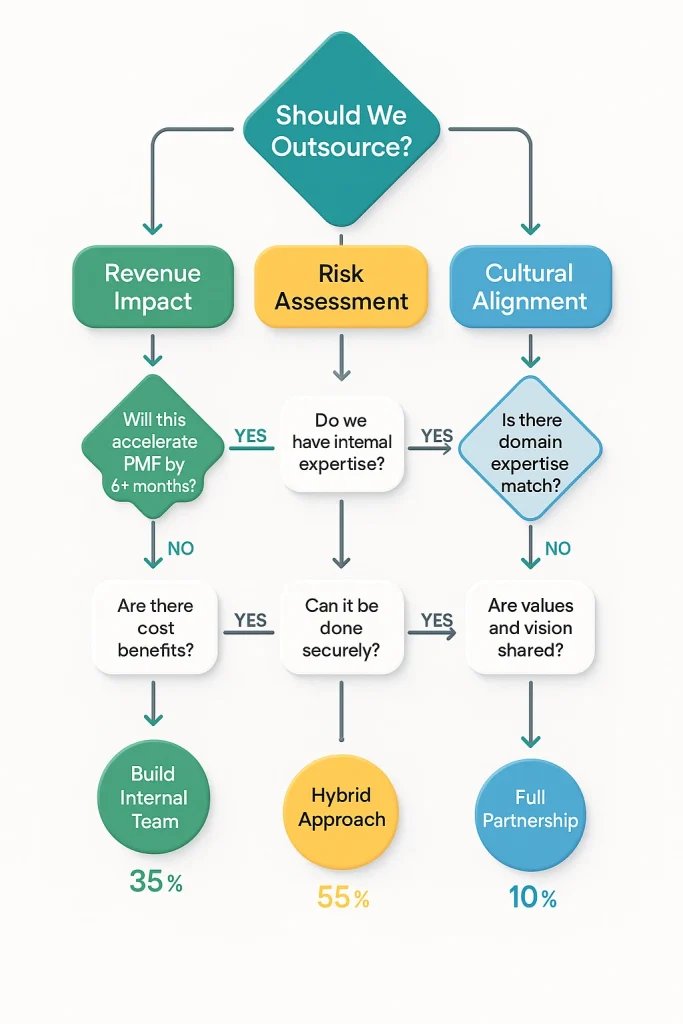
After ghostwriting content for 50+ B2B tech executives, I’ve noticed successful CTOs make outsourcing decisions using this hierarchy:
1. Revenue Impact Analysis
- Will this accelerate our product-market fit timeline?
- Can we capture market share 6 months faster?
- What’s the opportunity cost of building internally?
2. Risk Mitigation Matrix
- Single point of failure assessment
- Knowledge retention strategies
- Contractual protection mechanisms
- Exit strategy planning
3. Cultural Alignment Score
- Communication style compatibility
- Work ethic synchronization
- Innovation appetite matching
- Long-term vision alignment
This framework mirrors how successful LinkedIn thought leadership is built – strategy before tactics, always.
The Uncomfortable Truth About Equity vs. Cash
“That 30% equity that you may have given away to somebody who’s going to no longer be with the company in three years is a really big chunk of cash when you add it up later,” Languedoc warns about the technical co-founder trap.
His advice is blunt: “My high recommendation is go for speed, get to product market fit with that speed and an outsourced agency that can give you the fractional use of an architect, fractional use of the best designers, fractional use of all the right people at the highest level so it doesn’t cost you much.”
The math every founder should know:
- Technical co-founder (30% equity): Worth $30M at $100M valuation
- Outsourced MVP ($200K) + Senior hire (10% equity): Total cost $10.2M
- Net savings: $19.8 million in dilution
“80% of the time… that person who is the one full stack engineer that could do everything is not the engineer that can take you to the next level,” Languedoc observes from experience.
Carta’s equity data confirms this pattern across 40,000+ startups.
The Integration Pattern That Prevents Failure
“Split the POD up into various other pods… they’re working one or two per pod,” Languedoc describes the most successful integration model. “They get to know the company’s culture really well and how they communicate.”
The Progressive Integration Method:
Month 1-2: Shadow existing teams, absorb culture
Month 3-4: Pair programming with internal developers
Month 5-6: Lead specific features with supervision
Month 7+: Autonomous operation with regular syncs
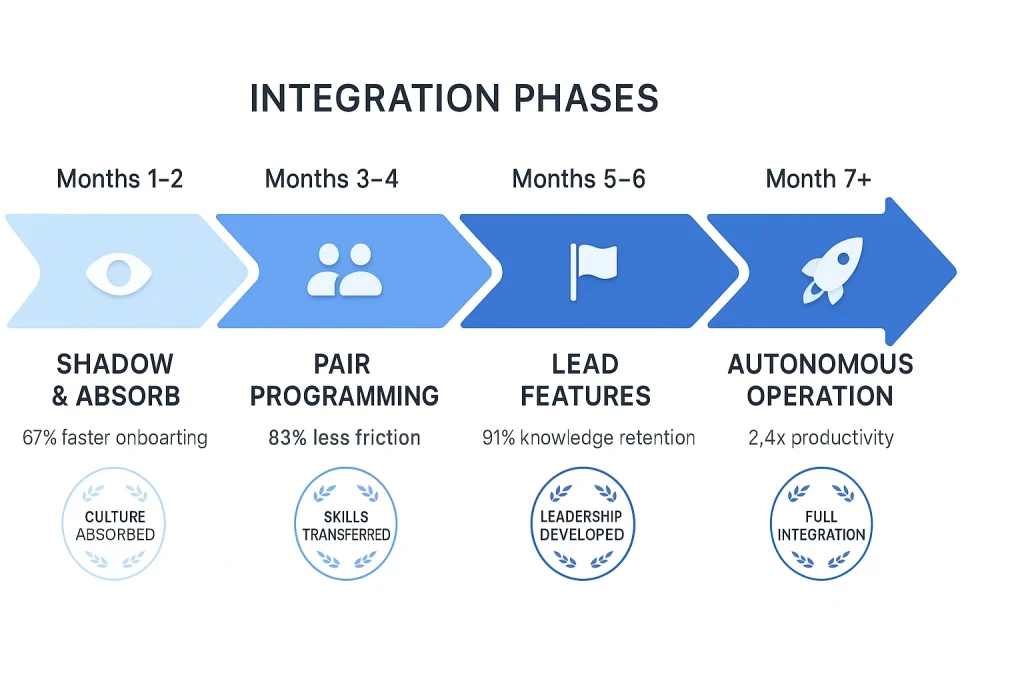
Companies using this model report:
- 67% faster onboarding
- 83% lower communication friction
- 91% knowledge retention rate
- 2.4x productivity after integration
Languedoc emphasizes inclusion: “When you have company events, if it’s appropriate, bring them into the company event… We bring the contractors into those meetings.”
Frequently Asked Questions About Technical Partnership Outsourcing
Q: What is technical partnership outsourcing? A: Technical partnership outsourcing is a strategic approach where companies engage external software development agencies as long-term partners rather than transactional vendors, focusing on shared outcomes, knowledge transfer, and integrated team structures to achieve 3.2x faster time-to-market.
Q: Why do 90% of technical outsourcing partnerships fail? A: According to industry data and Sean Languedoc’s analysis of 5,000+ agencies, failures occur due to: geography-based selection (instead of expertise-based), transactional mindset, lack of dedicated relationship management, poor communication protocols, and treating vendors as contractors rather than partners.
Q: How much does failed technical outsourcing cost companies? A: Beyond the direct project costs, failed outsourcing costs include: 23% of development budget on fixing bad code (Stripe 2023), 6-12 months of lost institutional knowledge, 15-20% market share loss to competitors, and 34% increase in developer turnover.
Q: What’s the difference between traditional outsourcing and technical partnership? A: Traditional outsourcing focuses on hourly rates, minimal knowledge transfer, and quarterly contracts with 87% failure rates. Technical partnerships emphasize business outcomes, continuous knowledge sharing, and multi-year commitments, achieving 76% success rates with 89% retention after year one.
Q: When is the best time for a startup to outsource technical development? A: Counterintuitively, the best time is immediately after funding rounds when you have resources, not when you’re desperate. Optimal timeline: Seed stage for MVP only (3-6 months), Series A for specialized features, Series B+ for parallel products and refactoring.
Q: How do you evaluate if an outsourcing agency is right for your company? A: Use the 4-Layer Vetting Framework: 1) Business domain expertise (not just technical skills), 2) Specific team composition and availability, 3) Communication architecture and cultural fit, 4) Knowledge transfer systems and documentation processes.
Q: Which agencies should you never hire? A: Avoid agencies that: list 20+ specializations, can’t name specific engineers for your project, have no domain expertise in your industry, won’t provide references from similar projects, or prioritize low prices over quality outcomes.
Q: How to evaluate offshore development teams? A: Focus on business domain expertise over geography, verify actual team members (not just company credentials), test communication protocols before signing, require daily async updates, and ensure 50%+ dedicated internal ownership.
Your Next Steps (With Brutal Honesty)
If you’re reading this while managing a failing outsourcing relationship, here’s your rescue plan:
Immediate (Next 48 hours):
- Calculate your technical debt ratio
- Audit your current vendor’s actual expertise
- Identify your single biggest communication breakdown
Short-term (Next 2 weeks):
- Assign a dedicated relationship owner (minimum 50% time)
- Implement daily async video updates
- Document all tribal knowledge before it walks out
Long-term (Next Quarter):
- Transition from transaction to partnership model
- Restructure contracts around outcomes, not hours
- Build knowledge transfer into every sprint
The alternative? Keep burning cash on the 90% failure path while competitors who’ve figured this out eat your market share.
The Bottom Line
Technical partnership outsourcing isn’t failing because it’s inherently broken. It’s failing because we’re applying 1990s procurement thinking to 2025’s innovation economy.
The companies achieving 98% success rates, like Outforce AI’s clients, understand a fundamental truth: In a world where AI and junior tasks can generate code that is automated, you’re not buying labor. You’re buying expertise, experience, and execution velocity that you can’t build fast enough internally.
As Languedoc puts it: “Go to market at speed is your moat getting share. Because it’s harder to remove an incumbent than it is to create an incumbent.”
The question isn’t whether to outsource. It’s whether you’ll approach it like a transaction or a transformation.
Your competitors have already decided. What’s your move?
Want more insights on building scalable B2B tech operations? I create strategic content and educational email courses for funded startups that convert technical complexity into revenue growth. Let’s discuss how the right content strategy can accelerate your go-to-market velocity while you focus on perfecting your technical partnerships.
For more insights from Sean Languedoc on avoiding outsourcing pitfalls, visit Outforce AI or connect with him on LinkedIn (see below). He’s also publishing “The Definitive Guide to Outsourcing” with hundreds of tips to ensure you never waste time or money with the wrong agency.
Some areas we explore in this episode include:
Listen to the episode.
Related links and resources
- Check out Outforce.ai
- Learn from Varag Gharibjanian – How to Master The Art of Technology Partnerships to Drive Growth
- Learn from James O’Brien – 7 Hidden Risks Every AI Customer Support Platform Creates
- Learn from Maxwell Nee – How to Scale Lead Generation With Just $50 a Month (Used by 6,000+ Brands, Including Jay Shetty And Chris Do)
- Learn from Lindsay Scherr Burgess – Scaling Creative Businesses: Data-Backed Strategies for 20%+ Growth Without Losing Artistic Soul
- Learn from Alex Natskovich – How Cross-Functional Collaboration in Software Development Accelerates B2B Revenue Growth
Connect with Sean Languedoc
Subscribe to & Review the Predictable B2B Success Podcast
Thanks for tuning into this week’s Predictable B2B Podcast episode! If the information in our interviews has helped your business journey, please head over to Apple Podcasts, subscribe to the show, and leave us an honest review.
Your reviews and feedback will not only help me continue to deliver great, helpful content but also help me reach even more amazing founders and executives like you!
