
B2B sales culture is the silent variable behind almost every revenue problem that stumps a funded founder.
Not the pipeline. Not the product. Not even the reps.
When deals stall, when great hires underperform at month three, when a customer complaint reveals that two reps on the same team handle it completely differently, that is a culture problem wearing a performance costume. And most CEOs at Series A and B stage are solving for the costume rather than the cause.
Key Takeaways
- Most B2B sales culture failures stem from treating culture as a project rather than an operating system
- Core values developed without a facilitated process are cultural theatre, not cultural infrastructure
- Your sales manager, not your values statement, is the primary transmitter of culture to every rep
- Sales attrition averages 35% across B2B organisations, nearly three times the rate of other industries, and culture is the primary driver
- Structure must precede hiring. Role clarity makes culture enforceable; its absence makes culture invisible
- Onboarding and ongoing coaching are where culture lives or dies post-hire
Glenn Poulos built and sold multiple distribution businesses across four decades, including Gap Wireless, which he grew from a startup to a multimillion-dollar operation before its 2022 acquisition. He wrote Never Sit in the Lobby: 57 Winning Sales Factors to Grow a Business and Build a Career Selling, an award-winning guide to field-tested sales standards. His view on B2B sales culture: it either becomes the foundation for everything else, or it stays a poster on the wall. There is no middle ground.
Table of Contents
About Glenn Poulos
Glenn Poulos is a veteran sales leader, entrepreneur, and author with over 40 years of experience building and scaling distribution businesses. He co-founded Gap Wireless Inc., a leading distributor in the mobile broadband and wireless markets, and grew it into a multimillion-dollar operation before its 2022 acquisition. He has also served as President of Anritsu Electronics Canada and now leads ProgUSA, a Florida-based distributor serving power utilities across the United States. His award-winning book Never Sit in the Lobby distils 57 sales factors drawn from real field experience. Glenn is a recognised LinkedIn Top Voice and sought-after speaker on sales leadership, negotiation, and culture-building. Learn more at glennpoulos.com or connect on LinkedIn.
Episode Video
What Is B2B Sales Culture? (and Why Most Definitions Miss the Point)
B2B sales culture is the set of shared behaviours, values, and unwritten standards that shape how a sales team engages with customers, handles difficult situations, and pursues revenue day to day.
That is the clean definition. Here is the one that actually matters.
Your B2B sales culture is whatever your reps do when no one is watching. Which leads they pursue. How do they handle a complaint when the sales manager is in another time zone? Whether they stand in the customer’s lobby or sit down and check their phone.
Glenn puts it plainly:
“You want to always be a pleasure to do business with, even when you lose the business.”
That standard either runs automatically, because it is embedded in how the team operates, or it does not run at all. There is no version where it exists as a slide and produces results in the field.
The mistake most funded founders make is confusing cultural artefacts with cultural infrastructure. A mission statement is an artefact. A Slack channel called #wins is an artefact. A structured onboarding programme, a peer recognition system tied to specific values, and a weekly EOS scorecard review are the infrastructure. One is decoration. The other is an operating system.
For a broader look at how operating systems shape sales team culture at scale, the episode with Murray Smith on building a business operating system that drives growth is a useful companion to this one.
Why B2B Sales Culture Quietly Breaks Down During Scaling
Here is what the numbers say.
The average annual sales attrition rate in B2B organisations is 35%, nearly three times the 13% average across all other industries, according to HubSpot research. Forrester’s data shows that B2B chief sales officers currently report 19.1% annual seller employee turnover, and individuals in sales roles report universally lower cultural engagement scores than employees in any other function.
That gap cannot be explained by compensation alone. According to SiriusDecisions, 60-80% of high-performing reps who leave cite incompetence or a lack of connection with leadership as contributing factors.
Let that land: the majority of your best reps leave partly because of how they are led, and by extension, the B2B sales culture that leadership models.
A pattern I notice across funded B2B tech companies, particularly those moving from seed to Series B, is that culture gets deprioritised during the scaling push. The team is closing, the pipeline is moving, and there is no obvious signal that anything is wrong. Then a new hire misses quota by month three. A customer complains about inconsistent service. A top rep leaves for a competitor. These feel like individual incidents. They are not. They are the same culture failure expressing itself three different ways.
According to Gallup’s State of the Global Workplace report, only 23% of employees worldwide are engaged at work, and disengagement costs the global economy an estimated $8.8 trillion annually. In a B2B sales team, even one disengaged rep can poison the culture for everyone else.
The fix is not a team offsite or a revised commission plan. The fix starts with being honest about what your culture actually is, rather than what you want it to be.
Core Values Are Not a Weekend Project
Glenn tells a story that every B2B sales leader should hear.
He joined a company where the founder had developed the core values by Googling them on the weekend. The result was a list of generic phrases: “customer first,” “people first,” and a handful of other things that could apply to any company in any industry. Nobody could recite them. Nobody acted on them. They existed to fill a slide in the pitch deck.
“The core values never changed from what he Googled on the weekend. You might get a little better with ChatGPT, but they still may not be your core values.”
Glenn Poulos, author of Never Sit in the Lobby
Real core values emerge from a facilitated process. Glenn’s recommendation is to assemble a cross-section of the business, including junior staff, mid-level managers, and senior leadership, and get them off-site for one to two days with a specialist facilitator. Not a box to tick. An investment that shapes every hiring, firing, and performance decision for years.
At Gap Wireless, the values Glenn’s team developed were operational, not decorative. The team built contests around them. They ran Jeopardy-style quizzes with cash prizes. They used Mojavity, a peer recognition platform, to let team members call out core value behaviours with real monetary rewards. Managers were incentivised to use their entire monthly recognition budget. The values were attached to consequences and recognition in equal measure.
This is what separates a living B2B sales culture from a poster culture.
A 2022 study by Achievers Workforce Institute found that 81% of employees say they feel more motivated to work harder when their employer recognises their contributions. Recognition tied to specific values-driven behaviours compounds that motivation into cultural consistency.
In my work supporting content strategy for funded B2B tech companies, the businesses that communicate their values most effectively externally tend to be the ones that live them most deliberately internally. There is a direct link between how a company talks about its sales culture in its LinkedIn presence and newsletter content and how genuinely it is practised on the ground.
Structure First, People Second: The Framework That Holds Culture Together
“Structure first, people second.”
Glenn Poulos
Before you hire a single rep, define exactly what role they are being hired into, who they report to, how their performance is measured, and where they fit in the revenue stack. Without that clarity, B2B sales culture becomes whoever happens to be loudest in the room.
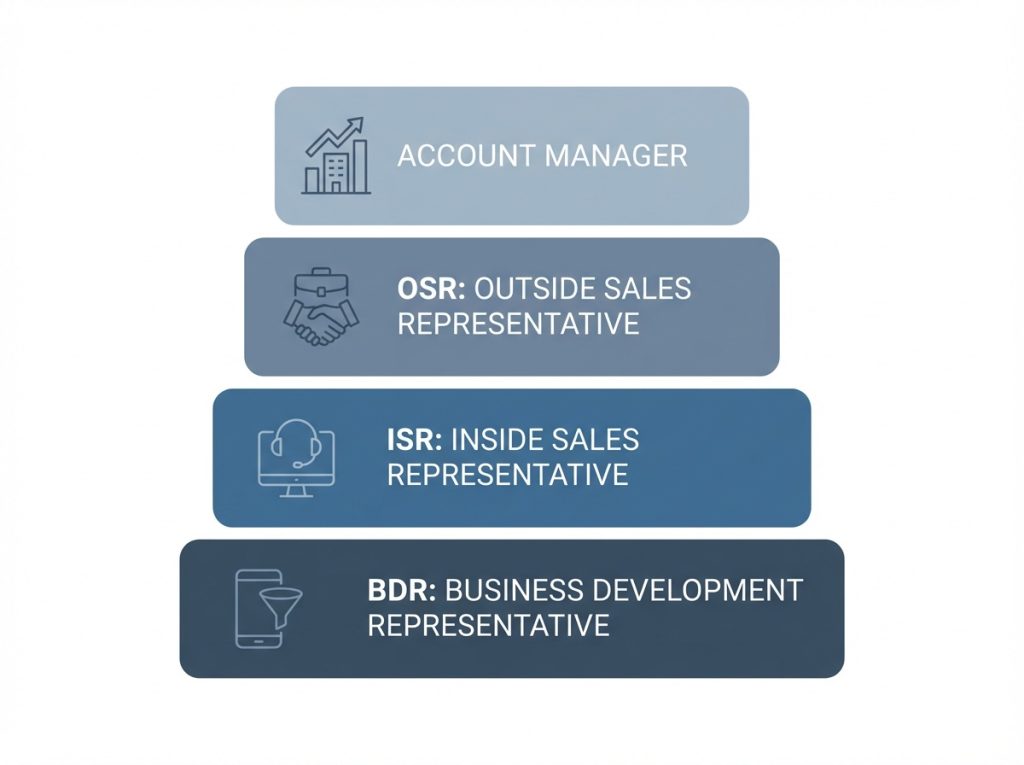
Glenn breaks his sales stack into four distinct layers.
Business Development Representatives (BDRs) handle top-of-funnel lead generation. Glenn outsources this function to the Philippines, citing quality, diligence, and cost-effectiveness. BDRs are measured on leads contacted, meetings booked, conversion to real opportunities, and response rates. Closing is explicitly not their metric. If a BDR develops a real opportunity and the outside team loses it, that loss belongs to the closers.
Inside Sales Representatives (ISRs) handle inbound traffic and smaller accounts that do not warrant field visits. Measured on deals closed, cycle length, revenue quota, margin, and average deal size.
Outside Sales Representatives (OSRs) own geographic territories. Their metrics centre on quota attainment, funnel size relative to quota (Glenn targets a 5:1 funnel ratio), and weekly pipeline movement.
National or Global Account Managers handle accounts too broad for a single territory.
When every person knows their role precisely, culture becomes enforceable. You can coach to it. Reward against it. Identify the people who fit it, and move quickly on those who do not.
Glenn uses the EOS talent framework to categorise salespeople into stars, puppies, rats, and enemies. Stars perform and embody the values. Puppies align with values but need performance development. Rats underperform and undermine the sales team culture. Enemies perform but actively damage the values you are trying to build.
The point: rats and enemies do not just hurt numbers. They drive away your stars. And your stars carry the culture.
One place this breaks down consistently is CRM adoption. Glenn describes a founder who mandates CRM use, then corners his best rep to ask about a major deal. The rep’s answer: It is all in the CRM. The founder has not read it. The rep walks away with one clear message: leadership does not live by the standards it sets.
If your team treats your systems as optional, your culture is optional. CRM adoption is not a technology question. It is a cultural signal. When leaders bypass their own processes, the team learns that standards apply to everyone except the people in charge.
Your Sales Manager Is Your Culture, Whether You Like It or Not
This is the gap most B2B sales culture initiatives never address.
You can run values workshops, print recognition posters, and build a Slack channel for wins. None of it will hold if the sales manager shows up differently every day. Because your reps do not absorb the company’s culture. They absorb it from the person who manages them.
LinkedIn’s 2024 workforce research found that 70% of employees said they would leave their job over a bad manager. Not poor compensation. Not a poor product. The manager.
In a B2B context, this means your sales manager is either replicating your culture in every one-on-one, every pipeline review, and every coaching conversation, or quietly eroding it. There is no neutral.
Glenn’s approach to sales leadership makes this explicit. Regular one-on-one coaching sessions. EOS weekly meetings with scorecards reviewed against forward and backward-looking indicators. Product training delivered as a team investment, not a grudge obligation. The manager’s job is not to track quota. It is to transmit standards.
In my work helping B2B tech founders develop executive content, I notice a parallel: the founders whose LinkedIn presence is most effective treat every post as a coaching moment rather than a promotional opportunity. The same logic applies internally. Culture flows from the person in front of the team, whether that person is the CEO at a town hall or the sales manager on a Monday pipeline call.
The Listening Problem No Sales Culture Playbook Addresses
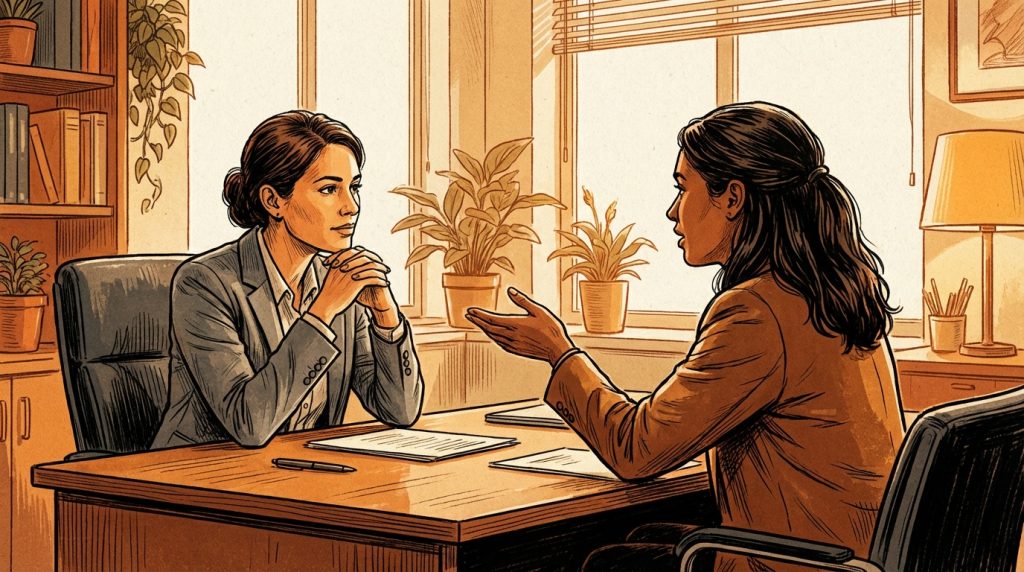
Every sales culture deck includes “customer focus” somewhere in the values list. Almost none address the specific behaviour that makes it real: active listening.
Glenn is unapologetic about this:
“God gave you two ears and one mouth. You do the math.”
Glenn Poulos
The problem is not that salespeople do not know they should listen. It is that incentive structures train them to talk. To pitch. To move the deal forward. When a prospect is mid-sentence, the average rep is already constructing the rebuttal.
Glenn describes a common failure mode: a prospect mentions they need software in nine languages. The rep jumps in after “high speed” and starts pitching their user base. The nine-language requirement never gets heard. Another vendor, the one who listened, walks away with the deal.
Active listening in a B2B sales culture context means building practices around it, not just listing it as a value. Glenn’s approach trains reps to learn the customer’s business as well as the customer knows it. Not just the first page of their website, but how they actually make money, what they ship out the back door, and who the real decision-makers are.
“The number one way to sell to a customer is to learn what they do as well as they know what they do.”
Glenn Poulos
This matters because a rep who understands the customer’s business does not pitch product features. They pitch business outcomes. And business outcomes are what close deals with the executives who sign the contracts.
A HubSpot study on sales performance found that 69% of buyers say the most important factor in a positive sales experience is a salesperson who listens to their needs. Yet most sales training programmes spend the majority of their time on pitch delivery.
The gap between what buyers want and what most sales cultures produce is significant, and it is a gap your culture either closes or widens, one rep at a time.
For a strategic look at how listening reshapes the full buyer relationship, the article on customer-centric approach as a competitive advantage covers this from a positioning angle.
How to Make Every Impression a Company-Wide Standard
One of Glenn’s most actionable frameworks is also the most transferable to B2B sales culture-building.
His golden rule:
“You only get forever to make another impression.”
Glenn Poulos
Most sales leaders teach first impressions. Glenn teaches that every interaction is a first impression. The moment a rep walks into a lobby. The moment they pass a familiar face in a customer’s hallway. The moment they send a follow-up email at 9pm.
He operationalises this through specific, coachable behaviours.
- Never sit in the lobby. Stand, face the door, stay mentally present.
- Always have something in your hand and something in your mind when you greet the customer.
- Ask for a mini tour. Walking the customer’s floor reveals what vendors they use, what problems they have, and who else you should meet.
- Before any visit, review the names and faces of everyone you know at that company. Greeting people warmly in the hallway is not charm. It is a repeatable standard.
These are not soft skills. They are trainable behaviours that can be observed, coached, and measured.
The cultural dimension: when leaders model these standards visibly and consistently, teams adopt them without being told. When leaders ignore them, no values statement will make up for it.
In my work helping B2B tech founders develop LinkedIn content and executive newsletters, the most effective thought leaders apply this exact principle to their content. Every post is a lobby moment. Every newsletter edition is a client visit. The impression compounds over time, whether you are managing it or not.
The article on creating value for customers through consistent standards covers how this translates into account retention and referral generation.
How to Build and Sustain B2B Sales Culture After Onboarding
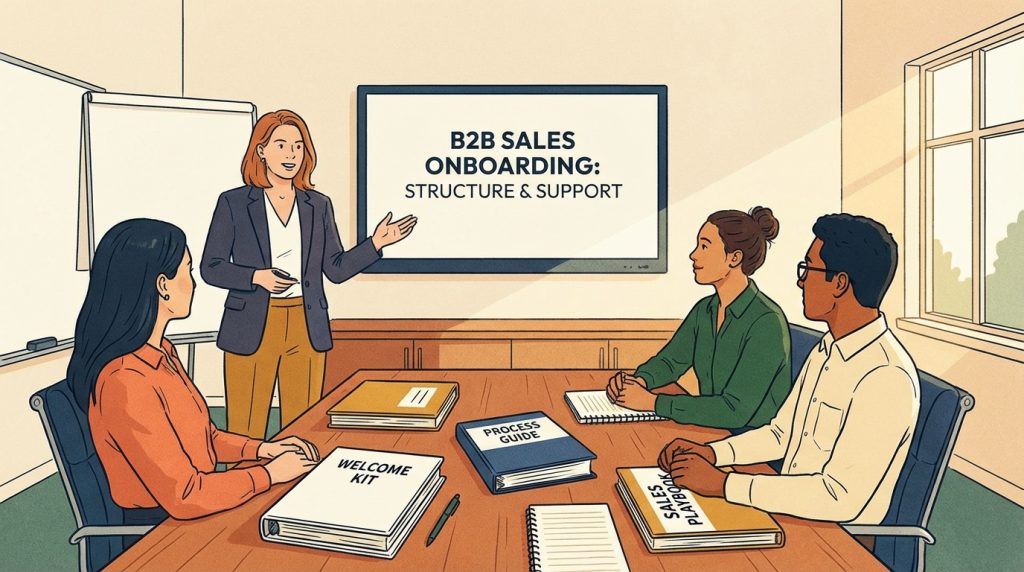
Glenn identifies onboarding as the single most commonly broken element of B2B sales culture.
“When you have to hire somebody new, it’s basically fire hose, throw them into the fire, sink or swim. Those are all their training strategies.”
Glenn Poulos
Poor onboarding is expensive beyond ramp time and salary. Every new hire who is poorly onboarded has to reverse-engineer the culture from whatever they observe. What they observe is a mix of good habits and bad ones. They cannot tell the difference. So they absorb both.
A Society for Human Resource Management study found that organisations with a strong onboarding process improve new hire retention by 82% and productivity by over 70%. For a B2B sales team where replacing a rep costs $115,000 in recruitment, training, and lost pipeline, these numbers matter immediately.
But onboarding is only the beginning.
Culture does not sustain itself post-probation. It requires ongoing maintenance through three mechanisms Glenn applies consistently.
- Regular one-on-ones. Not pipeline reviews dressed as coaching. Genuine conversations about forward and backward-looking indicators, where the rep is stuck, and what they need to move forward.
- Systematic product and methodology training. Delivered as a recurring investment, not a reaction to something going wrong. Training treated as optional is sales team culture treated as optional.
- EOS-aligned weekly team meetings. Each department meets for 60 to 90 minutes with a structured agenda: scorecard review, issues identification, and action assignment. The scorecard creates visibility. The issues process creates accountability. Together, they make culture auditable week by week.
This is how Glenn’s values survived across multiple companies and multiple growth stages. Not because they were beautifully written. Because they were built into the team’s operations every single week.
Your reps experience your B2B sales culture before your customers do. If selling at your company feels unclear, unsupported, or inconsistent, your customers will eventually feel it too. The internal experience and the external impression are not separate systems. They are the same system.
For a fuller look at how systematic team building connects to enterprise deal performance, the episode on enterprise sales best practices covers role clarity and structure at scale.
The companies that build durable B2B sales cultures are not the ones with the best value statements. They are the ones who bake culture into every touchpoint: how they onboard, how they recognise, how they define roles, how they listen to customers, and how they show up in every lobby they walk into.
Whether you are building that capability internally or working with specialists in executive content and communications to shape how your sales culture shows up externally, the foundation is the same: consistent standards, deliberate practice, and leadership that models what it asks of the team. Explore how strategic content builds that external face for funded B2B tech companies.
FAQ
What is B2B sales culture? B2B sales culture is the shared set of behaviours, values, and unwritten standards that shape how a sales team engages with customers and pursues revenue. In practice, it is whatever your reps do when no one is watching, built deliberately or absorbed haphazardly from whoever is loudest in the room.
Why do most B2B sales culture efforts fail? Most fail because founders treat culture as a one-time initiative. They define values without a facilitated process, skip the systems that reinforce them daily, and never connect values to performance metrics, hiring decisions, or manager behaviour. Culture without operational infrastructure is decoration.
How do you build a strong B2B sales culture from scratch? Start with a facilitated offsite to define genuine core values, not values you Google or generate with AI. Build recognition systems, onboarding programmes, and regular coaching cadences that reinforce those values daily. Define roles and metrics before you hire. Staff to the structure, not the other way around.
How does the sales manager affect B2B sales culture? Significantly. LinkedIn’s 2024 workforce research found 70% of employees would leave over a bad manager. In B2B sales, the manager is the primary culture transmitter through one-on-ones, deal coaching, and the behaviours they model daily. No values statement overrides a manager who operates differently.
How does onboarding impact B2B sales culture? Onboarding is the first and most critical moment of cultural transmission. Poor onboarding forces new reps to reverse-engineer culture from observation, absorbing good and bad habits equally. SHRM research shows that strong onboarding improves new hire retention by 82% and productivity by over 70%.
Related Resources
- How to Build a Business Operating System That Drives Growth — EOS framework and how it supports culture and accountability at every level
- Enterprise Sales Definition: Challenges and Best Practices — how to define sales roles and build a team structure that scales
- How to Overcome B2B Sales Challenges With Deal Coaching — translating culture into deal-level coaching and performance
- Customer-Centric Approach as a Competitive Advantage — building the listening and responsiveness disciplines that culture demands
- Creating Value for Customers: Strategies to Drive Growth — how values alignment connects to customer retention and referral
Related Links
- Glenn Poulos website
- Glenn Poulos on LinkedIn
- Never Sit in the Lobby on Amazon
- ProgUSA (Glenn’s current company)
Some topics we explore in this episode include:
Listen to the episode.
Subscribe to & Review the Predictable B2B Success Podcast
Thanks for tuning into this week’s Predictable B2B Podcast episode! If the information from our interviews has helped your business journey, please visit Apple Podcasts, subscribe to the show, and leave us an honest review.
Your reviews and feedback will not only help me continue to deliver great, helpful content but also help me reach even more amazing founders and executives like you!
