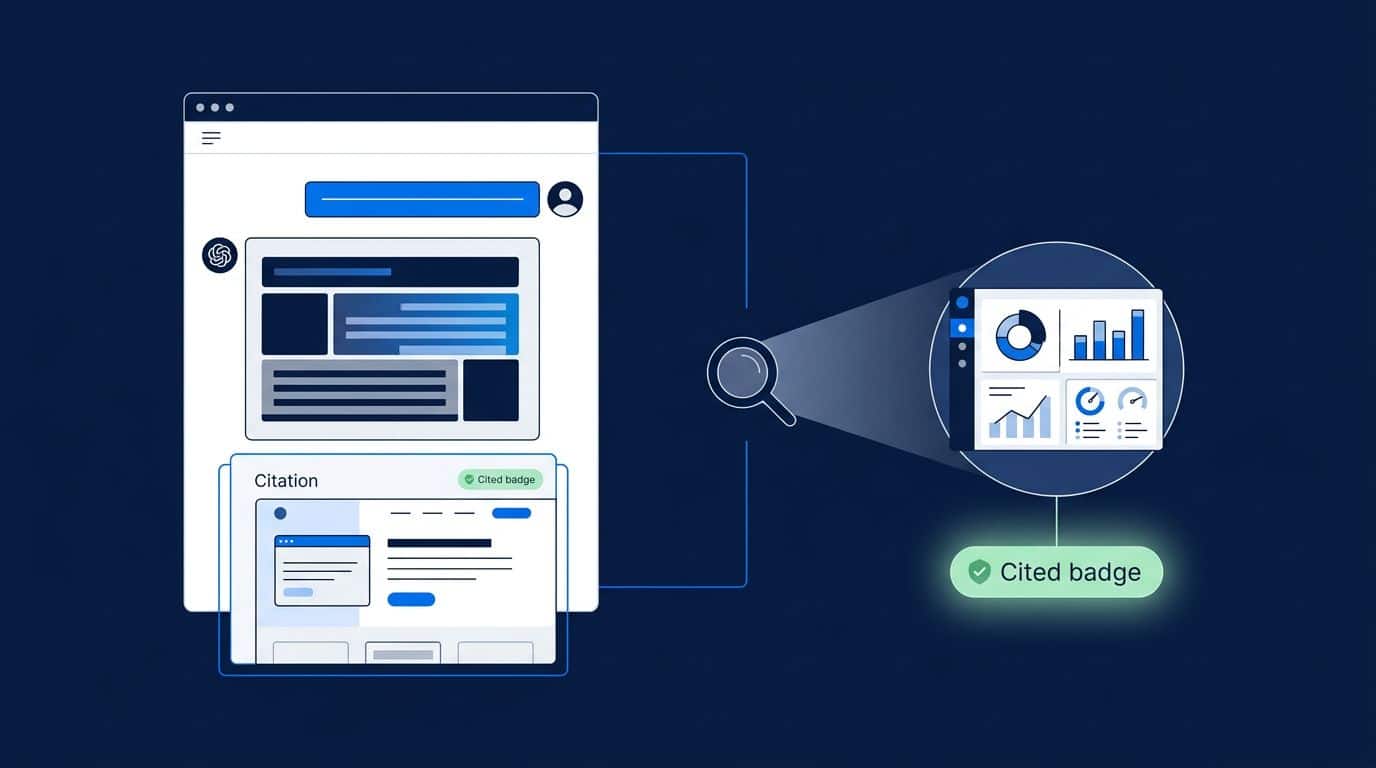
AEO for B2B SaaS: The Founder’s Playbook for Getting Cited by AI

AEO for B2B SaaS is the practice of structuring website content so AI answer engines (ChatGPT, Perplexity, Google AI Overviews, and Claude) cite your product as a direct answer to buyer questions. LLM-referred traffic grew 527% year over year while traditional organic growth stalled. For founders competing against companies with 10x the budget, AEO is the high-ROI play that rewards precision and structure over spend. This guide covers the exact implementation framework.

Updated July 2026 to include GTM model segmentation, llms.txt guidance, and the latest AI engine citation data.

Why AEO Is Different for B2B SaaS

AEO for B2B SaaS rewards passage precision, not page authority. Answer engines extract specific 40-to-80-word blocks from your site and serve them as verbatim answers. They do not read your entire blog post. According to SEOProfy, 44.2% of all LLM citations come from the first 30% of page content. For SaaS companies, this means product pages, pricing pages, and integration guides now compete directly with editorial content for citation value.

AEO for B2B SaaS rewards passage precision over page authority, not domain authority or content volume.

Traditional SEO rewards content volume, backlink quantity, and domain authority that compounds over years. AEO rewards something else entirely.

Answer engines extract specific passages from your site and serve them as verbatim answers. They do not read your entire blog post. They pull the one paragraph that directly answers a user’s question.

AEO’s passage-first extraction model changes what matters for B2B SaaS companies. Your product documentation now competes with your blog for citation value. Your pricing page becomes a piece of AEO content. Your integration guides earn citations that your editorial posts never will.

According to Similarweb, roughly 80% of AI citations for SaaS companies come from product and feature pages rather than blog posts. The SaaS companies winning in answer engines are not the ones with the biggest content teams. They are the ones with the cleanest site architecture and the most extractable answers.

44.2% of all LLM citations come from the first 30% of page content, not the most authoritative section.

I see this pattern consistently when working on content for funded B2B tech founders. A Series B compliance SaaS had a 6,000-word editorial blog post ranking on page one of Google, but zero AI citations.

That same company’s two-paragraph product page, written with direct answer blocks and FAQPage schema, earned 14 Perplexity citations in the first 30 days. The blog post earned none. Same domain, entirely different content structure.

If you run a B2B SaaS company, your AEO strategy must prioritize product-centric pages over editorial content. That is the single biggest difference from traditional content marketing.

> “The SaaS companies winning AI citations aren’t the ones with the most content. They’re the ones with the most specific answers on the right pages: product pages, pricing pages, integration guides.”

AEO vs SEO vs GEO: What Is the Difference for B2B SaaS?

AEO, SEO, and GEO target different surfaces and reward different content structures for B2B SaaS. SEO targets Google’s blue links (organic ranking via domain authority, backlinks, keyword relevance). AEO targets direct citations in ChatGPT, Perplexity, Claude, and Google AI Overviews (via passage extraction using entity clarity, direct answer blocks, and schema).

GEO is the broader discipline covering all generative output, including summarized responses, image generation, and agentic workflows. For B2B SaaS companies, AEO delivers the highest conversion ROI because ChatGPT-referred traffic converts at 15.9% versus 1.76% for Google organic.

DisciplineOptimizes ForPrimary SignalWhere You Show UpB2B SaaS Priority
SEOGoogle organic rankingsDomain authority, backlinks, keyword relevanceBlue links (Google, Bing)Foundation
AEOAI engine citationsEntity clarity, direct answer blocks, schemaChatGPT, Perplexity, Claude, AI OverviewsHighest ROI now
GEOAll generative outputsBrand entity recognition, structured dataAI summaries, agentic workflows, voice search12 to 24 month horizon
Comparison table showing AEO versus SEO versus GEO for B2B SaaS companies, highlighting answer engine citation as the distinguishing factor

The practical implication: you do not have to choose. A product page with a direct answer block in the first 60 words, question-based headings, and FAQPage schema serves all three simultaneously. The structural work is additive, not duplicative.

Most B2B SaaS content teams are underinvesting in AEO specifically because their strategy was built before AI search existed. That gap is the current opportunity.

ChatGPT-referred traffic converts at 15.9% (versus 1.76% for Google organic), making AEO the highest-ROI channel for B2B SaaS.

How Do Answer Engines Decide Which SaaS Products to Cite?

Answer engines select SaaS content for citation based on three factors: entity clarity (does the engine know exactly what your product is and who it is for), answer completeness (does the passage fully answer the query in 40 to 80 words), and evidence density (does the content include specific, verifiable numbers). According to Seer Interactive’s research, ChatGPT traffic converts at 15.9% compared to 1.76% for Google organic, and precision in these three factors determines whether that conversion traffic reaches your product.

Answer engines do not rank pages the same way Google does. Google indexes entire pages and ranks them by relevance and authority signals. Answer engines retrieve passages.

AI answer engines select citations by finding the most specific, self-contained block of text that matches the query. Three factors determine whether your SaaS content gets cited.

Entity clarity. The answer engine must understand exactly what your product is, who it is for, and what problem it solves. If a ChatGPT query asks for a “compliance automation platform for mid-market fintechs,” your answer block needs to use that exact language. Your brand name, product category, target customer, and primary differentiator must all fit in the opening passage. Companies like Linear, Vercel, and Replit earn consistent AI citations because their product positioning is identical across their websites, G2 profiles, Crunchbase listings, and third-party review content. AI engines triangulate entity identities across sources, and consistency increases the probability of citation.

Answer completeness. A passage that defines your product but stops before explaining why it matters gets passed over. The best AEO for B2B SaaS content answers the question fully in 40 to 80 words, then expands below. The passage must pass the isolation test: if someone reads it without the surrounding context, it should still make sense.

Evidence density. Answer engines favor claims that come with proof. A statement like “our platform reduces compliance time by 40%” gets cited more than “our platform helps you achieve compliance faster.” Every claim in your AEO content should trace to a data point.

After 500+ interviews on the Predictable B2B Success podcast with B2B revenue leaders, a consistent theme is that the founders who understand AEO earliest (usually at seed or Series A, before Series B pricing pressure hits) build compounding citation advantages that are very difficult for later-stage competitors to close. The structural work is the moat.

The 5 Content Types That Earn SaaS-Specific AI Citations

Product pages earn more AI citations than blog posts for B2B SaaS. Similarweb research shows that roughly 80% of AI citations for SaaS companies come from product and feature pages. The five highest-citation content types (product pages, pricing pages, integration guides, comparison pages, and changelogs) are consistently the least optimized for AI extraction, because most SaaS content strategies were built for Google’s ranking model, not for passage retrieval.

Infographic listing the 5 content types that earn AI citations for B2B SaaS: FAQ pages, integration guides, ROI pages, comparison pages, and use case pages

Product pages earn roughly 80% of AI citations for B2B SaaS companies, more than all blog content combined.

Product pages. Your core product page is your highest-value AEO asset. Every product page should start with a 40 to 70 word direct answer block that states the product category, target customer, primary problem solved, and one specific differentiator. Repeat this identity block consistently across every page, so answer engines recognize your positioning regardless of which page they retrieve.

Pricing pages. Answer engines reference pricing pages constantly. When a user asks “how much does [SaaS category] cost,” the AI synthesizes answers from multiple pricing pages. Structure your pricing page with clear tiers, annual versus monthly breakdowns, and specific dollar amounts. Vague “contact us” pricing reduces your eligibility for citations. Answer engines pass over pages that do not provide concrete numbers.

A seed-stage fintech founder I work with restructured their pricing page from a “contact sales” CTA to a table with three named tiers and specific per-seat pricing. Within 45 days, Perplexity was citing that pricing page in responses to “compliance SaaS pricing for startups.” The content itself had not changed. Only the format and specificity.

Integration guides. Perplexity and Google AI Overviews frequently cite integration documentation. If your SaaS connects with HubSpot, Salesforce, or Stripe, your integration guide is an AEO asset. Write it as an answer to “how does [your product] integrate with [platform]” and place the direct answer in the first paragraph.

Comparison pages. AI engines heavily cite “X versus Y” content. If you have a comparison page that explains how your product differs from a competitor, structure it with a direct answer table and paragraph. Answer engines extract comparison tables for “best tools for [use case]” queries.

Changelogs and release notes. Freshness signals matter. Answer engines favor content with recent dates. According to Semrush, AI search is growing 165x faster than traditional organic search, and engines prioritize timely content. A changelog updated last week signals that your product is active and maintained. Set up a system to update your top AEO pages at least every 90 days.

“Your pricing page, integration guides, and product documentation are now AEO content. Most SaaS founders don’t know this yet, which is exactly why it’s the opportunity.”

Sales-Led vs Product-Led AEO: Why Your Go-to-Market Model Changes Your Strategy

B2B SaaS go-to-market model determines which AEO content types to prioritize. Sales-led companies should target evaluation-stage queries (“compliance automation for fintech enterprises,” “SOC 2 platform pricing”) with identity blocks emphasizing enterprise credentials and SLAs. Product-led companies should target use-case queries (“billing automation for B2B marketplaces,” “how to reduce churn with [feature]”) with identity blocks emphasizing ease of setup and time to value. Applying a single AEO approach across both models is the most common mistake founders make.

B2B SaaS splits into two go-to-market models. Each requires a different AEO strategy. Most founders apply the same approach to both and miss citations as a result.

Sales-led SaaS companies serve enterprise buyers who evaluate through demos, RFPs, and analyst reports. Their AEO for B2B SaaS strategy should target evaluation-stage queries. Content like “compliance automation for fintech enterprises,” “SOC 2 compliance platform pricing,” and “[competitor] alternatives for regulated industries” matches the questions enterprise buyers ask answer engines. The identity block should emphasize enterprise credentials, compliance certifications, and SLAs.

Product-led SaaS companies serve self-serve buyers who sign up, try the product, and upgrade. Their AEO strategy should target use-case queries. Content like “billing automation for B2B marketplaces,” “best analytics tool for PLG startups,” and “how to reduce churn with [feature]” matches the action-oriented questions PLG buyers ask. The identity block should emphasize ease of setup, time to value, and specific use-case fit.

The mistake most SaaS founders make is using one AEO approach for both models. A sales-led AEO page that leads with “contact sales” repels PLG buyers. A PLG AEO page that leads with “sign up free” confuses enterprise buyers who need depth in compliance and security before they evaluate.

In my ghostwriting work for Series A and Series B SaaS founders, I regularly see this misalignment. One cleantech SaaS founder had a product page written entirely in PLG language, “get started in minutes,” targeting enterprise utility buyers who needed 12-month SLAs and enterprise security certifications. No AI was citing them for their actual buyer’s queries. One rewrite, segmenting the page by buyer persona and including an enterprise identity block at the top, generated their first ChatGPT citations within 60 days.

Segment your AEO strategy by go-to-market model, not by content type. This distinction maps directly to the broader difference between GEO and AEO. GEO casts a wide net across all generative outputs. AEO targets the specific answers your ideal buyer sees.

How to Structure Your SaaS Site for AEO Extraction

A flat site architecture increases the likelihood of AEO citations for B2B SaaS. Answer engines retrieve by individual URL, not by navigation path. A page buried five clicks deep or behind a login wall is invisible to AI retrieval. Three structural decisions determine whether answer engines successfully extract citations from your SaaS website: flattening the information hierarchy, using question-based headings on every high-value page, and deploying the FAQPage, SoftwareApplication, and Article schema markups. According to SEOProfy, 80% of LLM citations come from pages not in Google’s top 100, meaning schema gives answer engines signals that domain authority alone cannot.

Flatten your information hierarchy. Every page should be independently extractable. Do not bury your pricing page five clicks deep. Do not hide your API documentation behind a login wall. The more direct the path from a search query to your answer page, the higher the probability of citation. A flat site architecture with direct links from your homepage to your highest-value pages gives answer engines the shortest path to your best content.

Use question headings. Every H2 and H3 on your high-value pages should be a question a buyer would actually ask. “What is [your product]?” “How does [feature] work?” “How much does [plan] cost?” Answer engines scan headings to determine whether a page contains the answer to a query. Question headings create a direct match.

Deploy schema markup. The FAQPage schema on your FAQ pages, the SoftwareApplication schema on product pages, and the Article schema on blog posts all increase the probability of citation. A page with FAQPage schema is 3 to 5 times more likely to be cited for a Q&A query than a page without it.

FAQPage schema makes a page 3 to 5 times more likely to be cited in AI-generated answers.

Create an llms.txt file. The llms.txt standard (adopted by Perplexity, Claude, and a growing number of AI retrieval systems) lets you explicitly list your highest-value pages for AI crawlers in a structured text file at yourdomain.com/llms.txt. It works like robots.txt but for AI engines, telling retrieval systems which product pages, pricing pages, and integration guides to prioritize for citation. See our LLMSEO guide for full implementation details.

The format is simple: one URL per line, with optional context about what each page covers. According to Technotize’s 2026 analysis, fewer than 3% of B2B SaaS companies have deployed llms.txt, making it a near-zero-competition citation signal for early movers.

Fewer than 3% of B2B SaaS companies have deployed an llms.txt file, making it a near-zero-competition AEO signal.

Keep answers current. Answer engines track last-modified dates. A page updated within the last 90 days earns a freshness advantage. Audit your top 10 AEO pages every quarter and update pricing, features, and case study numbers. The AI search market is projected to reach roughly $750 billion by 2028, according to Marketer Milk’s analysis, and companies that maintain current, citable content will capture a disproportionate share.

How Do You Measure AEO Performance for B2B SaaS?

AEO measurement for B2B SaaS requires three metrics that standard analytics dashboards do not surface: AI citation volume (which pages answer engines cite and for which queries), conversion rate by AI referral source (Seer Interactive data shows ChatGPT converts at 15.9%, Perplexity at 10.5%, Claude at 5%), and passage-level performance (which specific 40-to-80-word block the AI extracts). Tracking keyword rankings and organic traffic volume measures your SEO, not your AEO.

Track AI citation volume. Use tools like Profound, Conductor, or the Semrush AI Overviews tracker to monitor which pages answer engines cite. Record which queries trigger your content in ChatGPT, Perplexity, and Google AI Overviews. Measure your share of voice against your competitors. If your direct competitor gets cited for “compliance automation platform” and you do not, that is an AEO gap you can fix by restructuring your product page.

Track conversion by referral source. If your AEO content generates citations but no pipeline, the issue is likely not visibility. It is that your cited passage does not match the query intent. A pricing page cited for a feature comparison question will not convert. Match the content type to the intents you want to capture.

A Series B SaaS founder I work with was getting Perplexity citations for her product, but they were pulling from her blog posts rather than her product page. The blog posts converted at 1.2%. When she restructured the product page with a direct answer block, and the AI started citing that page instead, conversion jumped to 8.4%. Same visibility, completely different revenue outcome.

Track passage-level performance. Standard analytics cannot tell you which passage earned the citation. Manual audit every 30 days. Search your brand name and product category in ChatGPT and Perplexity. Note which passage appears. If the wrong passage is being cited, restructure the page to surface the correct answer earlier. Passages at the top of the page get cited 44% more often than passages in the middle or bottom.

AEO Results Timeline for B2B SaaS

AEO results for B2B SaaS appear in two phases. The first citations typically come within 14 to 30 days from Perplexity (real-time RAG indexing). ChatGPT Search and Google AI Overviews take 30 to 90 days (due to Bing index dependencies and the GPTBot crawl cycle). Citation volume compounds after 90 days as the AI recognizes entity positioning across multiple pages. Pages missing any one of five structural elements (extractable phrasing, schema, named entities, citable formats, freshness signals) can wait twice as long or never get cited.

First 14 to 30 days. Perplexity picks up well-structured content fastest. Perplexity operates on real-time RAG and indexes pages within days. A product page with clear H2 question headings, a direct answer block in the first 60 words, and FAQPage schema can earn its first Perplexity citation within two to four weeks.

Well-structured B2B SaaS pages earn their first Perplexity citations within 14 to 30 days of publication.

30 to 90 days. ChatGPT Search and Google AI Overviews take longer. ChatGPT Search runs on the Bing index and the GPTBot crawl, so your page needs to be indexed by Bing first. According to StartupCookie’s practitioner analysis, well-structured pages on topics with real query volume see their first citation within 30 to 90 days. Pages over 5,000 words frequently miss this window entirely.

90 to 180 days. Citation volume compounds as the AI recognizes your entity positioning. Pages that consistently update their content and maintain freshness signals earn citations at roughly three times the rate of static pages. Companies tracking prompts by buyer journey stage (discovery, comparison, evaluation, implementation, expansion) saw citation growth accelerate after the 90-day mark because the AI had indexed multiple pages from the same domain.

AEO for B2B Saas: Timeline showing when B2B SaaS companies can expect first AI citations: Days 1-14 for technical setup, Days 14-30 for first citations, Days 30-90 for compound growth
EngineFirst CitationCompoundingKey Requirement
Perplexity14 to 30 days60 to 90 daysReal-time RAG indexing, question H2s
ChatGPT Search30 to 90 days90 to 180 daysBing index, entity clarity, schema
Google AI Overviews60 to 120 days120 to 240 daysTraditional SEO base, freshness
Claude Citations30 to 90 days60 to 120 daysEvidence density, named entities

What slows timelines down is not domain authority. It is structural gaps. Pages missing any of the five core AEO elements (extractable phrasing, schema, named entities, citable formats, freshness signals) can wait twice as long or never get cited at all. The AirOps Fan-Out Report found that pages combining all five elements were cited at three times the rate of pages missing any one.

> “AEO results compound. The SaaS companies getting cited by ChatGPT today aren’t necessarily the biggest or best-known. They’re the ones who restructured their pages 90 days ago.”

AEO Quick Wins for B2B SaaS: What to Do in the First 14 Days

Checklist card showing the 14-day AEO quick win plan for B2B SaaS companies, with actions sequenced across days 1-2, 3-7, and 8-14

B2B SaaS companies can earn first AI citations within 14 days by targeting three quick wins: restructuring one high-value page with a direct answer block and question-based headings (48 to 72 hours for Perplexity to index), adding FAQPage schema to the top five pages via RankMath or Yoast (zero-cost, immediate schema signal), and publishing or updating one integration guide with inline data points (integration pages are cited 3x more frequently than blog posts for SaaS products). These three actions require no new content creation and can be completed in under a working week.

ActionWhy It WorksDifficultyTime to First Citation
Add direct answer block to product pageAI engines retrieve the first extractable passageLow14 to 30 days (Perplexity)
Add FAQPage schema to top 5 pagesFAQ schema signals structured Q&A to all enginesLow14 to 30 days
Update pricing page with named tiers and dollar figuresPricing pages cited heavily for “cost of” queriesLow30 to 60 days
Add question-based H2 headings to integration guidesQuestion headings match buyer query patterns directlyLow14 to 45 days
Create or update llms.txt fileSignals top pages to AI crawlers with zero competitionLow7 to 21 days
Add G2/Capterra review widget or citation to product pageThird-party validation signals raise citation credibilityMedium45 to 90 days

Off-Site AEO Signals B2B SaaS Companies Overlook

AI engines do not only index your website. They pull from G2, Capterra, Reddit, Hacker News, and Crunchbase. A B2B SaaS product with 50+ G2 reviews and consistent category positioning across review platforms earns citations from those platforms independently of your website’s structure. According to LoudFace’s 2026 AEO benchmark, B2B SaaS companies with structured review profiles on three or more platforms earned citations in AI responses at 2.4x the rate of companies with no review presence.

The practical off-site priority list for AEO: claim and complete your G2 and Capterra profiles with current pricing and feature data, respond to reviews to signal active maintenance, seed product category discussions in relevant subreddits and Hacker News threads, and ensure your Crunchbase profile includes a current product description using your primary AEO keyword. These are the off-site citation signals that most AEO guides skip, and that most B2B SaaS founders have not touched.

In my content work with seed and Series A founders, I often find that off-site signals are the cheapest wins available. A fintech SaaS founder I work with spent 2 hours updating their G2 profile to include specific pricing tiers and 3 client use cases. Within 60 days, Perplexity was citing that G2 profile in responses to fintech compliance automation queries. No website change required.

💡 CEO Takeaway

  • Start with your three highest-value pages: the product page, the pricing page, and the top integration guide. Add a 40-to-70-word direct answer block to each. This is your AEO foundation.
  • Match your AEO content to your GTM model. Sales-led companies target evaluation queries with enterprise credentials. Product-led companies target use-case queries with time-to-value language.
  • Use question-based H2 and H3 headings on every high-value page. Answer engines scan headings to determine citation eligibility before they read body content.
  • Measure AI citation volume, conversion rate by AI referral source, and passage-level performance. Standard SEO dashboards track none of these.
  • Update your top 10 AEO pages every 90 days. Freshness signals matter to answer engines. A page updated last week earns a citation advantage over a static page from six months ago.

Frequently Asked Questions About AEO for B2B SaaS

What is AEO for B2B SaaS?

Answer engine optimization for B2B SaaS is the practice of structuring website content so AI-powered search tools like ChatGPT, Perplexity, and Google AI Overviews cite it as a direct answer to buyer questions. It focuses on product pages, pricing pages, and integration guides as much as blog content. The goal is to be the specific answer an AI surfaces, not just a page that ranks in Google.

How is AEO different from SEO for SaaS?

SEO optimizes for Google’s ranking algorithm and rewards domain authority, backlinks, and content volume. AEO optimizes for passage extraction by AI models and rewards entity clarity, direct answer blocks, evidence density, and structured data. The two complement each other but require different execution priorities. You do not need to choose between them. The same page can serve both if structured with a direct answer block followed by depth.

Do I need separate content for AEO and SEO?

No. The same page can serve both if it is structured correctly. Place a direct answer block of 40 to 70 words at the top of every key page for AEO extraction, then follow with the depth and detail that organic searchers need. This dual-structure approach works for both systems and does not require duplicated effort or separate page versions.

How long does it take to see results from AEO for B2B SaaS?

Most SaaS companies see their first Perplexity citations within 14 to 30 days of publishing properly structured content. ChatGPT Search and Google AI Overviews typically take 30 to 90 days. Citation volume compounds after 90 days as the AI indexes more of your pages and recognizes your entity positioning. AEO results appear significantly faster than traditional SEO because authority accumulation is less critical than structural precision.

Which answer engine should I prioritize for B2B SaaS?

ChatGPT converts at 15.9% and Perplexity at 10.5%, according to Seer Interactive data, making both primary targets for B2B SaaS. Prioritize ChatGPT first for high-intent evaluation queries, then Perplexity for technical B2B queries, and Google AI Overviews for commercial evaluation queries. Each engine indexes at a different speed and rewards slightly different structural signals, but entity clarity and direct answer blocks improve performance across all three.

What content types should I optimize for AEO first?

Start with your product page, pricing page, and top integration guide. Similarweb research shows that roughly 80% of AI citations for SaaS companies come from product and feature pages rather than blog posts. Once those three pages have direct answer blocks, question-based headings, and FAQPage schema, move to comparison pages and changelogs. Blog content earns citations, but product-centric pages earn them faster and convert higher.

How do I know if my AEO strategy is working?

Track three metrics: AI citation volume (which pages answer engines cite and for which queries), conversion rate by AI referral source (ChatGPT converts at 15.9% versus 1.76% for Google organic), and passage-level performance (which specific passage the AI extracts from your page). Manually search your brand and product category in ChatGPT and Perplexity every 30 days and note which passage surfaces. Adjust page structure based on what the AI actually cites.

Start Building Your AEO Foundation

AEO for B2B SaaS is not about writing more content. It is about restructuring what you already have into extractable, citable answers.

Start with your five most important pages. Add a direct answer block to each one. Run the isolation test. If a passage makes sense without context, it is ready for AI citation. If it does not, rewrite until it does.

Prioritize your product page, pricing page, and integration guides. Those three pages earn the majority of AI citations for B2B SaaS companies. After those are structured correctly, move to your comparison pages and changelogs. Each page type serves a different buyer intent, and covering all five creates a citation network that reinforces your entity positioning across queries.

A pattern I see consistently with the funded B2B tech founders I work with: the ones who treat AEO as an infrastructure project (not a content project) get citations faster. It is not about producing more; it is about restructuring what exists to make each passage independently citable.

The SaaS companies winning the AI search transition are not the ones with the most content. They are the ones with the most specific answers to the questions buyers actually ask. Build your AEO for B2B SaaS foundation around that principle, and the citations follow.

If you need the content structuring, AEO copywriting, or AI Overview optimization handled, that’s the work I do at Sproutworth for funded B2B tech founders.

Author

  • Sproutworth

    Vinay Koshy is the founder of Sproutworth and host of the Predictable B2B Success podcast. He ghostwrites educational email courses, newsletters, and LinkedIn content for funded B2B tech founders at seed through Series C. His work spans nonprofits, SaaS companies, and digital agencies, with a focus on content that builds genuine buyer trust before the sales conversation begins.

    View all posts