AI Overview Optimization: How to Get Cited by Google in 2026

AI overview optimization is the practice of structuring content so Google’s AI selects it as a cited source in AI Overviews. These summaries now appear above organic results on roughly 48% of searches. Ahrefs data shows those summaries cut position-one click-through rates by 58%. For B2B tech companies with strong SEO rankings, AI overview optimization is the next urgent priority. Structure, not authority, determines citation eligibility.

AI overview optimization is distinct from SEO: citation eligibility depends on the answer structure, not ranking position.

What Google AI Overviews Are (and Why AI Overview Optimization Matters)

AI Overviews are Google’s AI-generated answer boxes that synthesize content from multiple pages and display a summary at the top of search results. They first appeared at scale in mid-2024 and now show on roughly 48% of all searches, up 58% year over year.

The critical data point for B2B marketers: 93.8% of AI Overview citations do not come from pages in the top 10 organic results, according to the Digital Marketing Institute.

93.8% of AI Overview citations come from pages outside Google’s top 10 organic results. A page ranked #23 with the right structure might be.

The 93.8% figure breaks the core assumption of traditional SEO. Ranking well earns clicks. Getting cited in AI Overviews earns something different: visibility with buyers who never click at all. With 64.82% of Google searches now ending without a click, being cited matters more than ever for brand exposure.

AI overview optimization addresses this directly. It is not the same as SEO, and confusing the two is where most B2B content teams go wrong.

How Google Selects Sources for AI Overviews

Google AI Overviews are generated by Gemini, Google’s large language model. When a query triggers an AI Overview, Gemini retrieves content from pages already in Google’s index, synthesizes a response, and links out to source pages as citations. The process runs independently of the standard organic ranking algorithm, which is why pages ranked outside the top 10 can still earn citations.

The retrieval process is what makes AI overview optimization structurally distinct from traditional SEO. Gemini does not simply quote the highest-ranking page. It scans multiple pages to find the best extractable passage for each sub-question in the query. A page ranked #8 can earn a citation if its opening paragraph answers the question more cleanly than the page ranked #1.

Google’s Gemini selects the clearest answer per sub-question, not the highest-ranked page.

Three signals drive the selection. Answer clarity: Does the page state a direct answer within the first 200 words? Content structure: Do the headings map to the sub-questions inside the query? Trust: Does the page carry author attribution, external citations, and a clear publication date? All three are controllable through content decisions, not link campaigns.

This is what makes AI overview optimization practical. You can improve citation rates within weeks by restructuring existing content, without earning a single new backlink. Every content decision listed in this guide maps directly to one of these three selection signals.

Why AI Overview Optimization Is Different for B2B Tech

AI overview optimization is different for B2B tech because the queries that trigger AI Overviews are the same ones B2B buyers ask during active purchase research. BrightEdge data shows complex, multi-step queries are growing 49% year over year in AI Overviews. B2B buyers research categories, compare vendors, and evaluate frameworks through Google before they contact a sales team. That buyer behavior makes B2B content the highest-opportunity format for AI Overview citation.

Your competitors’ homepage copy won’t answer those questions. Your 2,000-word thought-leadership piece might. This is where B2B content has a structural advantage most teams don’t use.

The queries that trigger AI Overviews most often map to real purchase intent: “how to choose a B2B SaaS data security tool,” “vendor onboarding frameworks for mid-market finance,” “best practices for sales and marketing alignment in SaaS.” These are not high-competition keywords. They are buyer questions with no dominant single answer in the top 10.

An AI overview optimization strategy for B2B means targeting those questions deliberately and structuring content so Google’s AI can extract a clean, confident answer from your page.

We work with B2B tech companies that rank on page one for important keywords but receive almost no AI Overview citations. The issue is rarely domain authority. It is almost always how the content is structured.

The 5 Content Decisions That Drive AI Overview Optimization

1. Put the Answer in the First 200 Words

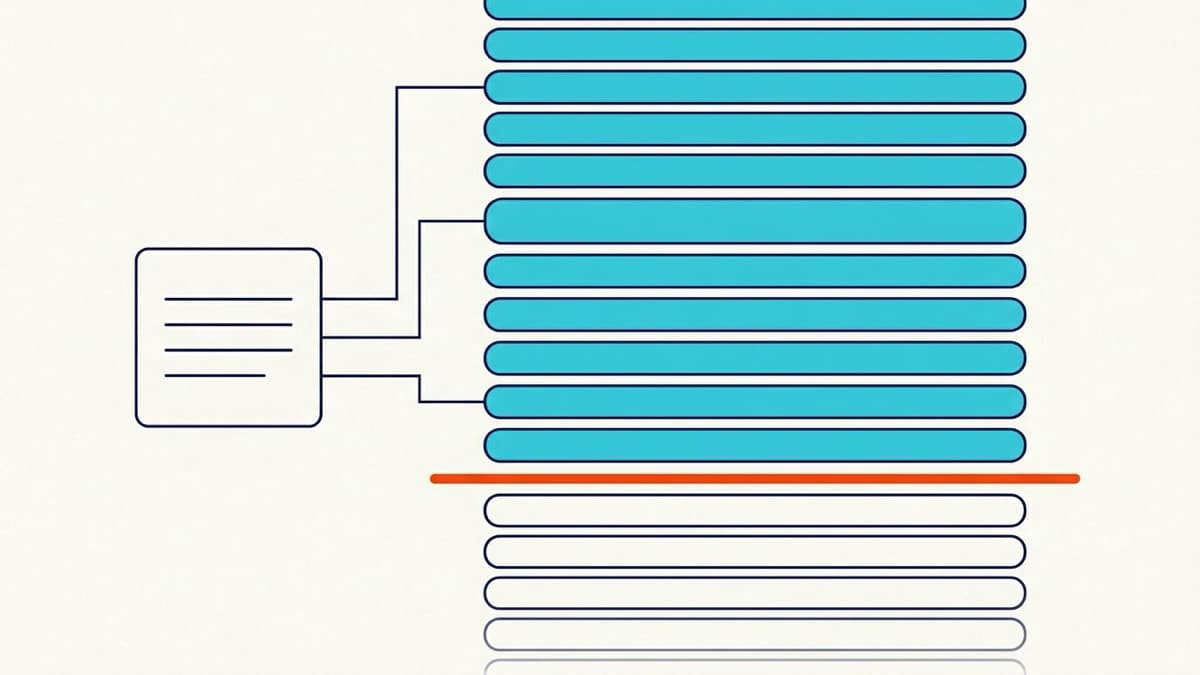
Google’s AI extracts cited content heavily from the top of a page. CXL research found that 55% of AI Overview citations come from the top 30% of a page’s content. The bottom half of a 2,000-word article is rarely cited, regardless of quality.

Five-step checklist infographic for AI overview optimization including schema markup, question-based headings, and E-E-A-T signals for B2B tech content

The fix is the inverted pyramid: give a direct, concise answer to the page’s core question in the opening paragraph, then support it with detail below. Most B2B content does the opposite. It opens with context and history, buries the answer in section three, and saves the concrete recommendation for the conclusion.

A post titled “How to reduce churn in B2B SaaS” should open with a 2-3 sentence answer naming specific tactics. Not “Churn is one of the most pressing challenges facing SaaS companies today.” That opener earns no citation.

This is also the structure behind answer engine optimization. The principle is the same: AI wants a quotable answer near the top of the page.

2. Match Your H2s to Real Buyer Questions

AI Overviews are built around multi-step queries. When Google’s AI processes a search, it looks for pages where a heading directly mirrors that question, followed by a direct answer.

Structure your H2s as questions: “How do you build a zero-trust security policy for a SaaS company?” outperforms “Zero Trust Security Policies” for AI Overview selection. Add a 40-80 word direct answer in the first paragraph below that heading. Google can extract it cleanly and attribute it to your page.

This is the core mechanics of LLMSEO and generative search optimization. The heading is the signal. The first paragraph is the candidate for citation.

3. Add Schema Markup for AI Overview Optimization: FAQ, HowTo, and Article

AI Overviews favor machine-readable content. FAQ schema, HowTo schema, and BlogPosting schema all help Google map your content to specific query types.

Most B2B tech content has no schema at all. Not even basic Article markup. Adding FAQPage schema to a post with 4-5 well-formed questions dramatically increases the surface area for AI citation. Google matches each Q&A pair to a specific buyer question without inferring the answer from unstructured paragraphs.

Schema is not a traditional ranking factor. In AI overview optimization, it functions as a citation shortcut. It tells Google exactly what questions your page answers and where the answers live.

4. Build E-E-A-T Signals AI Can Read for AI Overview Optimization

Google’s AI cites pages from brands it can verify as authoritative. The same E-E-A-T signals that improve traditional rankings also influence AI citation selection.

Specific, verifiable signals: author pages with named credentials, industry certifications referenced on the site, data-backed claims with cited sources, and clear company information. These signals are readable by Google’s models at index time.

One signal most B2B content teams skip: citing external sources inline in the article body, not as footnotes or a resources list at the bottom. AI models treat citation links within sentences as trust signals. A claim attributed to a Gartner report reads as more credible than the same claim without attribution.

This matters especially for brand content built to earn AI citations. The goal of AI overview optimization is to be the source Google quotes, not just a page that mentions the topic.

5. Target Deep Pages for AI Overview Optimization, Not Category Pages or Homepages

Search Engine Land analyzed which page types earn AI Overview citations. About 82% came from deep pages: detailed, specific content articles rather than product pages, homepages, or category listings.

Your solution pages are unlikely to be cited, no matter how well-optimized they are. AI Overviews need enough content to synthesize. A 300-word product page cannot answer a multi-step buyer query.

The asset that earns AI overview optimization results is the in-depth guide: 2,000 words, direct answers near the top, question-based H2s, FAQ schema, and verified external citations. That is the format Google’s AI has been trained to trust.

How to Audit Your Existing B2B Content for AI Overview Readiness

AI overview optimization readiness comes down to five measurable content signals: answer placement, heading structure, schema coverage, citation density, and page depth. Run this AI overview optimization audit on your top-performing posts before creating new content. Pages that already earn Google’s trust through rankings are the fastest path to earning AI Overview citations through structural improvements.

Here is the audit checklist:

  • Does the first paragraph answer the page’s core question in under 80 words? If not, rewrite the opening.
  • Are your H2s questions or statements? Statements are fine for traditional SEO. Questions are better for AI overview optimization.
  • Is the FAQPage schema in place? If not, add a 4-5 question FAQ section to each post and push the schema.
  • Are external sources cited inline in the article body, not just listed at the bottom?
  • Is the page over 1,500 words with a clear topic focus? Thin content rarely achieves strong AI overview optimization. Multi-topic posts are rarely cited either.

Most teams find 3-4 of their top posts pass this audit with minor edits. The rest need structural rewrites. Starting with posts that already rank on page one is the most efficient path. Google already trusts those URLs.

One thing we consistently find when auditing client content: the posts with the clearest answer in the opening paragraph are already close to citation-eligible. The gap is almost never content quality. It is structured.

How Content Clusters Multiply Your AI Overview Optimization Impact

A single well-optimized post earns one citation opportunity. A content cluster earns many. Google’s citation selection favors domains that cover a topic across multiple interconnected pages, because topical depth signals authority at the domain level, not just on one URL. Sites with tightly linked content clusters earn AI Overview citations at significantly higher rates than isolated posts on the same topics.

Hub and spoke diagram showing AI overview optimization content cluster strategy with LLMSEO, AEO, GEO SEO, and brand content nodes for B2B tech

For B2B tech companies, the cluster strategy means building a set of posts around adjacent buyer questions, all internally linked. A company targeting “AI overview optimization” earns more citation opportunities when that post links to related posts on LLMSEO, AEO, GEO SEO, and brand content for AI search. Each post answers a distinct buyer question. All of them reinforce the domain’s authority on AI search visibility.

The SEOcrawl analysis of the June 2025 Core Update found that sites with interlinked content clusters consistently outperformed broader, shallower sites by up to 30% in AI citation rates. Isolated well-written posts do not perform as reliably as posts embedded in a topical cluster.

For Sproutworth clients, this is the case for building a dedicated content program rather than one-off posts. One post can earn a citation. A cluster of 5-8 posts on adjacent topics earns citations across the entire category of buyer questions relevant to your product. That is the compounding effect of AI overview optimization at the program level, which is why it compounds faster than traditional link building.

When to Compete for AI Overview Citations (and When to Pivot)

Not every query worth ranking for is worth targeting with AI overview optimization. Some queries are dominated by AI Overviews with very low citation click-through, meaning even a citation earns minimal traffic. Others are commercial queries where buyers need depth and specificity that no AI Overview can fully provide, and they click through regardless.

For B2B tech CEOs, the decision framework for AI overview optimization is straightforward. Target AI overview optimization for queries in the awareness and consideration phase, where a buyer is researching categories and frameworks. These are the queries most likely to trigger AI Overviews, and citation in them builds brand credibility before buyers are in active vendor evaluation.

For high-intent, transactional, or vendor-comparison queries, AI Overviews appear less frequently. Traditional SEO and conversion-optimized pages remain the right investment there.

The practical test for AI overview optimization targeting: search for your target query manually. If an AI Overview appears and occupies significant visual real estate, optimize that page for citation. If the SERP shows no AI Overview, optimize purely for click-through and conversion.

Measuring Your AI Overview Optimization Progress

Google Search Console does not yet provide a dedicated AI Overview report. Impressions and clicks from AI Overview appearances are recorded in standard Search Performance data alongside organic listings, which means you cannot distinguish AI Overview traffic from regular clicks without a third-party tool. The gap between rising impressions and falling CTR on a query is your first signal that an AI Overview appeared.

The practical workaround for measuring AI overview optimization: use Semrush or BrightEdge to track which of your target queries trigger AI Overviews. Monitor your Search Console CTR for those specific queries over 30-60 day windows. A CTR that drops while impressions hold steady signals that an AI Overview appeared on that query.

Third-party tools, including Profound, Conductor, and the Semrush AI Overviews tracker, can tell you whether your content is being cited and what the cited snippet looks like. These are the same tools we cover in our guide to LLM SEO performance tracking across platforms.

Direct citation tracking is the clearest available measurement for AI overview optimization. If a tool confirms your page is being cited in an AI Overview for a target query, the optimization is working.

What to Do When AI Overviews Are Eating Your Organic Traffic

AI overview optimization, and organic traffic recovery are not mutually exclusive strategies. When an AI Overview appears on a query where you already rank, your response depends on whether your page is being cited. If it is cited, the content structure is working and the existing format should be preserved. If you rank but are not cited, the issue is almost always a buried answer and headings that read as statements rather than questions.

Three response patterns by scenario for AI overview optimization:

Cited in the AI Overview: Optimize for the reader who clicks through from the citation link. That reader is further along in their research than a typical organic visitor. Make the post worth their time with depth and specificity.

Ranked but not cited: Rewrite the opening paragraph as a 60-word direct answer. Convert H2s from statements to questions. Add FAQPage schema if absent. These three changes address the most common reasons Google bypasses a well-ranked page in the AI overview optimization process.

Query fully absorbed by zero-click AI Overview: Assess whether the query still drives pipeline value. For B2B, most high-value queries require more nuance than an AI Overview can provide. Buyers comparing SaaS vendors or evaluating security frameworks do not stop at the AI box. Focus AI overview optimization on those queries first.

The GEO SEO framework addresses the broader tradeoff for teams managing both traditional and AI overview optimization strategies simultaneously.

55% of all AI Overview citations come from the top 30% of a page’s content.

Frequently Asked Questions About AI Overview Optimization

What is AI overview optimization? AI overview optimization is the process of structuring content so Google’s AI selects it as a cited source in AI Overviews. The key differences from traditional SEO: answer placement matters more than keyword density, schema markup signals answer boundaries to Google’s AI, and deep content pages earn AI overview optimization results at far higher rates than short or product-focused pages.

How do I know if my content appears in Google AI Overviews? Google Search Console does not provide a direct AI Overview report. Use Semrush’s AI Overviews tracker, Profound, or Conductor to monitor which queries trigger AI Overviews and whether your domain is cited. You can also manually search your target queries and check whether your page appears in the citation links below the AI box.

Does ranking on page one guarantee inclusion in AI Overviews? No. According to the Digital Marketing Institute, 93.8% of AI Overview citations are not from the top-10 organic results. A page ranked #15 with a well-structured, answer-first format can outperform a page ranked #2 with a traditional blog post structure for AI citation purposes.

How many words does a post need to be cited in AI Overviews? There is no fixed minimum, but 82% of AI Overview citations come from deep content pages rather than short or thin content. Posts in the 1,500-2,500 word range that cover a single focused topic with question-based H2s and FAQ schema are the most consistently cited format.

How long does AI overview optimization take to show results? Structural changes from AI overview optimization can influence AI Overview citations within 2-4 weeks for pages that Google already crawls regularly. This includes adding FAQPage schema, rewriting the opening paragraph, and converting H2s to questions. New posts targeting fresh queries typically enter Google’s citation pool within 4-8 weeks.

What content types are most likely to be cited in Google AI Overviews? Deep content pages earn 82% of all AI Overview citations. For B2B tech companies focused on AI overview optimization, posts in the 1,500-2,500 word range covering a single focused topic consistently outperform shorter posts and product pages. Question-based H2s, FAQPage schema, and named external citations are the deciding factors.

The Shift Every B2B Tech Team Needs to Make

AI overview optimization is not a replacement for SEO. It is a parallel discipline with different success criteria: ranking gets you into the organic results, and AI overview optimization gets you into the AI answer before those results even appear. For B2B tech companies, the queries at stake are buyer research queries, not branded searches, making citation placement the highest-leverage content investment available in 2026.

Most B2B tech companies are one structural rewrite away from earning AI Overview citations on their best existing content. The post that already ranks on page one has the domain trust. It often needs only a rewritten opening, question-based H2s, and FAQPage schema to move from ranked to cited.

Sproutworth helps B2B tech companies build content that earns citations in both traditional search and AI Overviews. If you want to know which of your posts are closest to AI overview optimization readiness, start with the audit checklist above and apply the five content decisions to your highest-traffic pages first.

Author

  • Vinay Koshy

    Vinay Koshy is the founder of Sproutworth and host of the Predictable B2B Success podcast. He ghostwrites educational email courses, newsletters, and LinkedIn content for funded B2B tech founders at seed through Series C. His work spans nonprofits, SaaS companies, and digital agencies, with a focus on content that builds genuine buyer trust before the sales conversation begins.

    View all posts